



3 Reasons to Switch to a Credit Union

Reasons to Switch to a Credit Union

Last updated on March 25th, 2022

Bigger isn’t always better – even in the world of personal finance. In an industry where everyone pushes for more – a higher credit limit, a bigger starting bonus, longer introductory APR – consumers will find that it might very well be the little guys who have the biggest benefits. If you’ve never considered it before, here are the most compelling reasons you’d want to switch to a credit union.

Why Choose a Credit Union Account vs. a Traditional Bank?

While today isn’t International Credit Union Day, every day is a great day for switching banks and deciding to join a credit union! Some things money just can’t buy – and a great banking experience is one of them. Credit unions are a tall drink of water when compared to some of the bigger, more well-known, players in the financial industry: simple, refreshing, and transparent.

Both banks and credit unions are financial institutions and offer many of the same products such as checking and savings accounts, credit cards, loans, and CDs – but credit unions offer a personal touch that makes all the difference. Credit unions exist to serve their members, offering competitive rates and unrivaled customer experience and often give back to the local community.

Three Reasons Why You Should Consider Joining a Credit Union

It’s no secret that credit unions offer some of the most lucrative saving accounts and the lowest APR credit cards ever offered – so why haven’t more consumers made the switch? If you’re frustrated with poor customer service, low-interest rates, and having jump through financial hoops, here are the main three reasons why you should switch to a credit union and kiss the big banks goodbye.

credit unions are member owned

1. Credit Unions are Owned By Its Members

No, you didn’t read that incorrectly. If you have savings, checking, a loan, or a credit card with a credit union, you are both an owner and an operator of it. The reason for this is also the main difference that sets credit unions apart from traditional banks.

Banks are for-profit institutions – they’re in the businesses of making money from your money while you may see little to none of their dividends your money helped to earn. Credit unions, on the other hand, are non-profit institutions that exist to pass on the earnings to their members. As such, credit unions are able to offer much more competitive rates on things like loans, savings accounts, or credit cards, than traditional banks would be able to offer.

why choose a credit union

2. Credit Unions Have Better Rates

Since credit unions are focused on growing your money and putting it back in your pocket, they offer highly competitive rates on all of their financial products to pass the credit union’s earnings on to you. Banks tend to offer higher interest rates than credit unions. This means better returns on your investments such as your savings accounts or CDs and lower interest rates when it comes to taking out a personal, home, or car loan – or opening a credit card.

Did you know that you could earn interest through your checking account too? Credit unions outshine traditional banks there as well. Take, for instance, the average bank savings account interest rates s: the highest yields are nowhere close to a single percentage of interest. Consumers Credit Union based in West Michigan offers an incredible high yield savings bank account of around 4% APY – that’s 80X the national average APY!

Banks are for-profit institutions – they’re in the businesses of making money from your money while you may see little to none of their dividends your money helped to earn. Credit unions, on the other hand, are non-profit institutions that exist to pass on the earnings to their members. As such, credit unions are able to offer much more competitive rates on things like loans, savings accounts, or credit cards, than traditional banks would be able to offer.

switch to a credit union

3. Easier Access to Your Money (and Fewer Hoops to Jump Through)

Traditional banks often will offer bonuses or alluring interest rates on accounts to get you to deposit your money with them. While scoring “free” money or a competitive interest rate on loans may seem like a win, these punched up perks usually come with a number of limitations such as:

  • A monthly direct deposit of a minimum amount
  • A required minimum balance that must be maintained at all times
  • A specific monthly spend with this account
  • Access to other credit union branches and ATMs
  • The same online banking and mobile banking access as major banks

Credit unions aren’t interested in keeping your money in their hands, and for this reason, they typically impose fewer restrictions when it comes to maintaining an account and accessing your money when you need it.

Ready to Switch to a Credit Union?

You (and your money) deserve to be treated like the financial rock stars that you are. Moving your money to a credit union isn’t just a commitment to your fattening up your wallet but is also a great way to make a positive impact in your local community. Explore the equally exciting credit union credit card offers to take advantage of low APRs (single digits!), flexible application approval odds, and credit building capabilities of credit union credit cards.

Related Article: The Best Overlooked Credit Cards

Featured photo by mohamed_hassan/ PixaBay

How Long Does It Take to Rebuild Your Credit Score?

How long does it take to rebuild your credit score

Last updated on November 28th, 2022

When you’re ready to begin the steps to rebuild your credit score, it won’t take long to realize that there is no quick fix. Just as you need time to build up your initial score, you also need time to turn it around. So exactly how long does it take to improve a bad credit score to a good credit score? Unfortunately, the answer can vary.

Depending on the current state of your credit report and your financial strategy going forward, rebuilding credit can require anywhere from a few months to a year or more. Find out what can prolong credit improvement and ways you can nudge the process along below.

How Bad Credit Can Hurt You Financially

First, a refresher on the negative impacts of bad credit. Bad credit can negatively impact almost all aspects of your financial well-being. Having a trouble credit history can result in less access to unsecured, revolving credit, difficulty acquiring auto loans, mortgages, and other personal loans, higher interest rates, and potentially other hardships such as loss of employment opportunities (some employers check credit during the hiring process), or difficulty renting a new apartment.

Factors That Prolong Rebuilding Your Credit Score

Lenders typically send reports to credit bureaus on a monthly basis, though it can vary. This means it can take at least one month to see your score budge at all, let alone make a full recovery. Yet even if you start changing your financial habits today, previous actions can still significantly dampen your improvement efforts. Even worse, relying on misinformed ways to improve your credit score can hold you back further.

Negative Marks

The types of negative information you have on your credit report play a large role in how long it takes to rebuild your credit score. According to Experian, negative marks significantly affect your credit score and can linger on your credit report for years depending on your circumstances. For instance, a bankruptcy will remain on your report and affect your score for up to 10 years.

Account delinquencies, or missed payments, on the other hand, generally fall off after 7 years. If you’re dealing with either of these, it may take longer to boost your score than it would for someone with too many hard inquiries (when checking your credit score, which only stay on a report for 2 years).

Misinformation

Some people believe you need to carry a small balance from month to month to improve your credit. Unfortunately, misinformation like this can actually set you back and become costly in the long run. In the end, time and responsible credit card use are the best tools in your credit-building arsenal.

How to Improve Your Credit Score Fast

While there is no quick hack or trick for rebuilding your credit score, there are still plenty of ways you can take action. Time will allow your negative marks to lose their potency and eventually drop off. Meanwhile, strategic credit card use can help you create positive trends in your report and gradually boost your score.

Aside from paying off any outstanding debts, utilizing a credit card can often be the best way to improve a credit score. Of course, it can be difficult to even get one with a low score. For that reason, many companies offer credit cards specifically designed for credit improvement – and they aren’t all secured credit cards that require a deposit.

The Indigo® Platinum Mastercard® or Merrick Bank Double Your Line™ Platinum Visa®, for example, offer a quick and easy pre-qualification feature. This allows you to find out your likelihood for approval before you apply for a hard inquiry. Once approved, you automatically gain an unsecured $300 credit limit, though your creditworthiness determines your annual fee.

The credit limits with these cards may sound low, and that’s because they are – but that doesn’t mean cards like this can’t help you raise your credit. If you follow these simple guidelines, any credit-building card can work its magic on your score:

  • Keep your credit utilization ratio down where you can. Even if you pay it off every time, maxing out your account often makes you seem high-risk.
  • Make your payments on time and consistently. always pay your bill on time. This is the most important, as payment history is the singe largest contributor to a FICO Score or VantageScore. This simple task improves your trustworthiness in the eyes of lenders and lowers your risk factor.
  • Keep old credit accounts open, even if you aren’t using them. This makes it easier to manage your utilization ratio and can lengthen your credit history.

If you’re looking for a few more benefits and a potentially higher credit line in your card, Credit One Bank offers a number of impressive credit cards that provide Visa benefits like Zero Fraud Liability – plus rewards like cash back on certain purchases. Credit One also offers pre-approval to help you see if you qualify before applying.

Related Article: What Are the Easiest Credit Cards for Bad Credit to Get?

Featured image by mohamed_hassan/ PixaBay

Blue Apron, Aspiration to Launch Co-Branded Credit Card

blue apron aspiration zero credit card

Last updated on April 5th, 2023

Blue Apron has reached an agreement with Aspiration to launch the first-of-its-kind meal kit credit card. The new Blue Apron Aspiration Zero Card, set to launch in 2022, will offer rewards on qualifying Blue Apron purchases while helping to combat climate change at the same time.

Blue Apron to Launch First-Ever Meal Kit Credit Card

Aspiration, the leading platform for banking with a conscience, has agreed to launch the co-branded Blue Apron Aspiration Zero Card with meal kit company Blue Apron. The new co-branded credit card will offer its cardholders rewards to help fight the climate crisis while earning rewards on qualifying purchases made at BlueApron.com and on the Blue Apron mobile app, as well as extend benefits currently available to all Aspiration Zero Card customers.

Customers using the Blue Apron Aspiration Zero Card will be able to offset a part of their carbon footprint – just as with the Aspiration Debit Card and Aspiration Zero Credit Card. With every qualifying purchase made on a Blue Apron Aspiration Zero Card, Aspiration will plant a tree and let users plant an additional tree by rounding up purchases to the nearest dollar.

Card Set to Launch in 2022

While no launch date for the new Blue Apron credit card is set, 2022 is anticipated. This 2022 date coincides with Blue Apron’s tenth anniversary in business.

“As we kick off our tenth anniversary in 2022, we want to recognize our best and most loyal customers—some who have been with us since we shipped our first box,” said Dani Simpson, Blue Apron’s Chief Marketing Officer, in a press release announcing the new card. “Customers who use the Blue Apron Aspiration Zero Card on qualified purchases will receive cash back benefits along with an opportunity to help make a difference in the world around them.”

“This first-of-its-kind partnership in the meal-kit industry showcases the alignment of the Aspiration and Blue Apron visions,” said Andrei Cherny, Aspiration’s Chief Executive Officer. “We couldn’t be happier to partner with Blue Apron around not only rewarding their customers financially but also helping those customers have a positive and effortless impact on the environment.”

Related Article: The Best Dining Credit Cards for Foodies of 2022

Featured image by stevepb/ PixaBay

FICO vs VantageScore – How to Differentiate Two Credit Scoring Models

Fico vs vantagescore how to differentiate two credit scoring models

Last updated on March 8th, 2023

FICO® is a familiar name. in credit and personal finance. But have you heard of VantageScore®, too? What are they, and what do they mean for consumers who want to open a line of credit?

FICO® vs VantageScore®: What's the Difference?

FICO and VantageScore are the two major general-purpose credit scoring models in the United States. They’re used by banks and credit card issuers to determine if an applicant for a credit card or loan should be approved. These models are based on software that analyzes a consumer’s personal credit report to generate a credit score. This score helps predict an important criterion for would-be candidates: The likelihood that an applicant will fall at least 90 days behind on a bill within the next 24 calendar months.

This prediction is the primary metric that banks use to approve or decline applications.

Both models help predict a consumer’s ability to repay both existing and future debt. Both evaluate multiple criteria when determining a consumer’s credit score. However, the way these two models treat the credit data used to determine this benchmark can differ. Let’s explore the differences between the two credit scoring models:

What is a FICO® Score?

The Fair Isaac Corporation (FICO®) introduced its first scoring model for lenders more than thirty years ago. Since 1989, 90% of the leading banks and card issuers have relied on FICO’s model when making lending decisions.

As of this writing, it is in its ninth iteration – the FICO Score 9 model. The FICO Score 10 model rolled out in the summer of 2020. This new model means updates to the predictive power of the FICO Score. It also brings more precision and flexibility with trended data.

A FICO Score groups the information provided by consumer credit reports into five categories, each of which is assigned a percentage of the total score:

  • Payment History (35%) – Every lender wants to know if you pay your bills and past accounts on time. Paying accounts on time is a good indicator to a lender that you will continue this behavior. For this reason, this is the most important factor in a FICO score.
  • Amounts Owed (30%) – Borrowers also look at the amount of money you currently owe from each of the existing accounts you already have. Owing money to multiple accounts won’t disqualify you from approval for a new loan or credit card. However, using too much of your available credit may indicate you are over-extended. Banks may interpret what they see as over-extension as a higher risk of default.
  • Length of Credit History (15%) – A long credit history will often increase your FICO score. However, this will also depend on how your overall report looks. A long credit history that features several defaulted accounts will not work in your favor, for example. The opposite is also true. A person with a shorter credit history can still have a high FICO score if their credit report looks good. The FICO score evaluates several criteria for length of credit. These criteria include the average age of your accounts, when the last time an individual used each account, and more.
  • New Credit (10%) – FICO evaluates how you shop for credit, in addition to the number of credit accounts you’ve opened. They look at the time frame during which you opened said accounts. Each time you apply for credit, the lender makes a credit inquiry – a request for your credit report or score. Each inquiry stays on your credit report for two years. FICO only considers inquiries from the last twelve months. Too many inquiries and opening several accounts in a short time can be a red flag for lenders.
  • Credit Mix (10%) – This refers to the diversity of your credit file – your credit cards, retail accounts, installment and mortgage loans, and finance company accounts. The more accounts you have with good credit history, the better your FICO score will be. Credit mix is not typically a key factor in determining your FICO scores. However, if your file does not have a lot of other information, it can play a role in determining your score.

FICO is a bureau-specific scoring model. Each of the major credit reporting companies (CRCs) has their own FICO Score 9 model. FICO Score ranges from 300 to 850. 300 is poor credit, while 850 is considered “perfect” credit.

What is a VantageScore®?

The VantageScore model was developed by the three major consumer credit bureaus. It was created as a means to introduce a credit scoring model that is both more predictive and easier to apply and understand. Created in 2006, it went through several iterations before it debuted in 2013 as VantageScore 3.0. The 3.0 model became incredibly successful. Although there is now a VantageScore 4.0 model, 3.0 is still widely used by many major issuers, including Discover. VantageScore is the first and only credit scoring model to incorporate trended credit data from all three national CRCs.

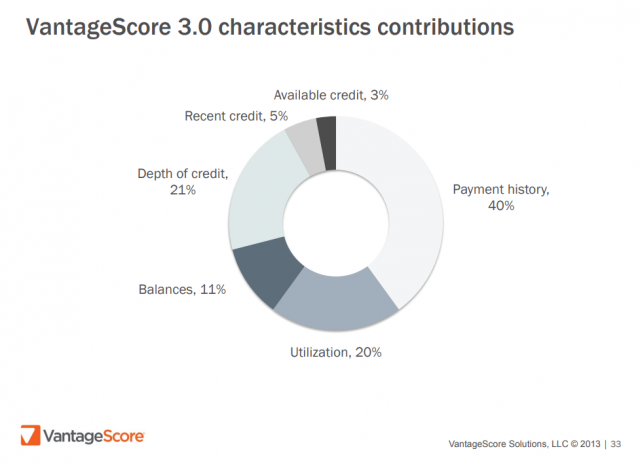
A VantageScore reflects the evaluation of information in six categories. Taken from a consumer’s credit file, this information is described in terms of influence. VantageScore’s descriptive terms usually range from “extremely influential” to “less influential.” However, they have released a breakdown of the factors they evaluate for VantageScore 3.0:

  • Payment History (40%, or Extremely Influential) – VantageScore gives the most weight to whether a consumer has made on-time payments regularly in the past.
  • Depth of Credit (21%, or Highly Influential) – This refers to a combination of factors like credit age and credit mix. Essentially, it is an evaluation of a consumer’s length of credit, as well as the types of credit they use.
  • Utilization (20%, or Highly Influential) – Credit utilization is another factor that VantageScore marks as highly influential. Lenders look at the amount of available credit a consumer uses at any given time. If you are using a large percentage of your available credit (carrying a balance on multiple cards, for example), you may see a negative impact on your credit score. Credit experts recommend that consumers use 30% or less of their available credit at any time.
  • Balances (11%, or Moderately Influential) – This factor considers the total of each recently reported balance. It includes both current and delinquent credit accounts.
  • Recent Credit (5%, or Less Influential) – VantageScore also looks at the number of new accounts you’ve opened. Whether you’ve taken out a loan or opened a new credit card, lenders want to know. This information can be an indicator of future financial performance.
  • Available Credit (3%, or Less Influential) – Lenders want to see that you’re not taking out more credit than you actually need. According to VantageScore, the average amount of unused credit for prime consumers ranges from $20,000 to $22,000.
Vantagescore 3.0 infographic
Image courtesy of VantageScore

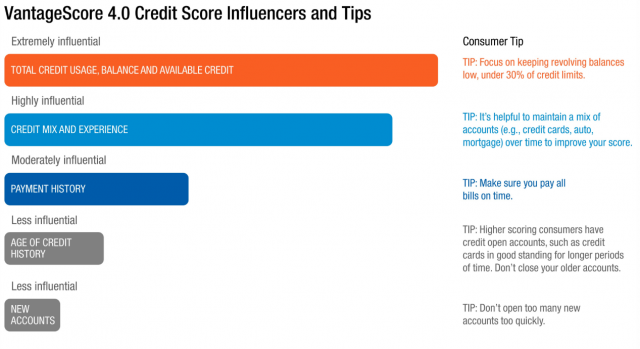
For VantageScore 4.0, the scoring has received an update. Note that this newer scoring system does not apply as universally as 3.0. Here’s a preview of the how each metric is weighted for VantageScore 4.0:

 
Vantagescore 4.0 infographic

As a tri-bureau model, it can be used with a credit report from Experian, TransUnion or Equifax. VantageScore currently ranges from 300 to 850. 300 is poor credit, 850 is “perfect” credit.

Differences Between FICO® and VantageScore

There are several distinctive differences between the FICO® Score and the VantageScore models when it comes to evaluating credit. Both models prove useful, particularly for lenders – and both models produce scores that are easy for consumers to obtain. What sets them apart from each other?

Firstly, a limited credit history does not prevent a consumer from obtaining a VantageScore. FICO requires at least six months of credit history, while VantageScore can produce a score within two months or less. Consumers whose lack of credit results in no FICO score can still get a VantageScore.

Another differentiating factor is how the two models weigh late payments. The type of late payment becomes a factor here. All late payments can damage your score. However, VantageScore gives higher significance to late mortgage payments, while FICO treats all late payments the same.

Each time you apply for a loan or a credit card, a hard inquiry hits your credit file. A hard inquiry can lower your credit score, and multiple inquiries are a red flag for lenders, too. When evaluating consumers’ credit files, both FICO® and VantageScore de-duplicate these inquiries. De-duplication occurs when multiple inquiries count as one inquiry.

A good example of this would be an auto loan. An auto loan application often goes to multiple lenders. This leads to multiple inquiries within a short time period. Both scoring models de-duplicate this, although the time span they use for de-duplication differs for each. FICO uses a 45-day span, while VantageScore limits its focus to a 14-day range. Additionally, FICO de-duplicates only mortgages, auto loans, and student loans. VantageScore de-duplicates multiple hard inquiries for all types of credit, including credit cards.

Finally, FICO and VantageScore both penalize accounts that are sent to collection, although they handle them differently. The amount of the balance is important, as well as whether it’s been paid off or not. FICO does not count collections where the original balance was under $100, and it also discounts collections that have been paid off. These will not affect your FICO score, and VantageScore only ignores paid collection accounts. Accounts with a balance of less than $100 will be penalized by VantageScore once sent to a collection agency.

Related Article: Credit Card Application Rules for Major Banks


TD Bank Survey Finds Holiday Shopping Leads to Anxiety

td-bank-survey-finds-holiday-shopping-leads-to-anxiety

Last updated on April 6th, 2023

TD Bank’s 2021 Merry Money Survey reveals how consumers deal with the financial burdens of the holiday season. The annual survey from TD Bank found that Millennials are most likely to tap into emergency savings to pay for holiday expenses. However, both Millennials and Boomers are likely to overspend and impulse purchase during the holidays. Here are the full findings of the 2021 Merry Money Survey from TD Bank:

TD Bank Reveals Findings of 2021 Merry Money Survey

The holiday season is supposed to be the “happiest time of the year.” Still, many Americans find the financial costs of the holidays overwhelming. According to TD Bank’s 2021 Merry Money Survey, more than half of consumers describe the holiday shopping experience as painful, with 33% of respondents likening the pain of holiday shopping to a root canal.

TD Bank polled 1,004 U.S. consumers to measure their shopping, spending, money management habits, and overall sentiment during the holiday season. The survey found that while Americans are increasingly responsible with their holiday spending, with 73% creating a budget – up from 66% in 2018 – 66% of consumers stating that the financial aspect of the holiday season makes them feel anxious.

Other Holiday Shopping Survey Findings

Other noteworthy findings from TD Bank’s 2021 Merry Money Survey include:

  • Millennials have previously overspent: 41% of all surveyed have previously experienced a negative financial situation because of holiday spending
    • Among them, 48% Millennials surveyed agreed, whereas only 30% of Boomers indicated they have previously had this experience
    • In fact, 14% of Millennials plan to spend more than $100 on each of their pets, making sure to include their furry friends in their holiday celebrations. Compared to 1% of Boomers surveyed
  • Boomers and Millennials do have one thing in common: Almost ¼ of both (Millennials 25%, Boomers 24%) say they don’t stick to their budget if they create one for holiday shopping
    • Both Millennials and Boomers also tend to go over budget on impulse purchases made on stocking stuffers, with 50% of Millennials and 66% of Boomers agreeing
    • Similarly, both groups also said they had previously overspent if they’d found the perfect gift that was over budget, with 55% of Millennials and 66% of Boomers surveyed not sticking to their budget for this reason
  • Swiping matters: 42% of Americans cite using a debit card vs. 36% who use a credit card for most of their holiday spending
    • Millennials far outranked boomers in their usage of debit cards, opting out of rewards programs (48% of millennials cited using a debit card, 36% of boomers did the same)
    • Conversely, Boomers preferred credit cards as their primary payment method (46% of those surveyed), with only 28% of millennials using them for holiday shopping

Related Article: The Best Credit Cards for Holiday Entertaining

Featured image by Sarah Pflug/Burst
 

Chase Soft-Launches New Ink Business Premier Card

Chase Soft-Launches New Ink Business Premier Card

Last updated on April 6th, 2023

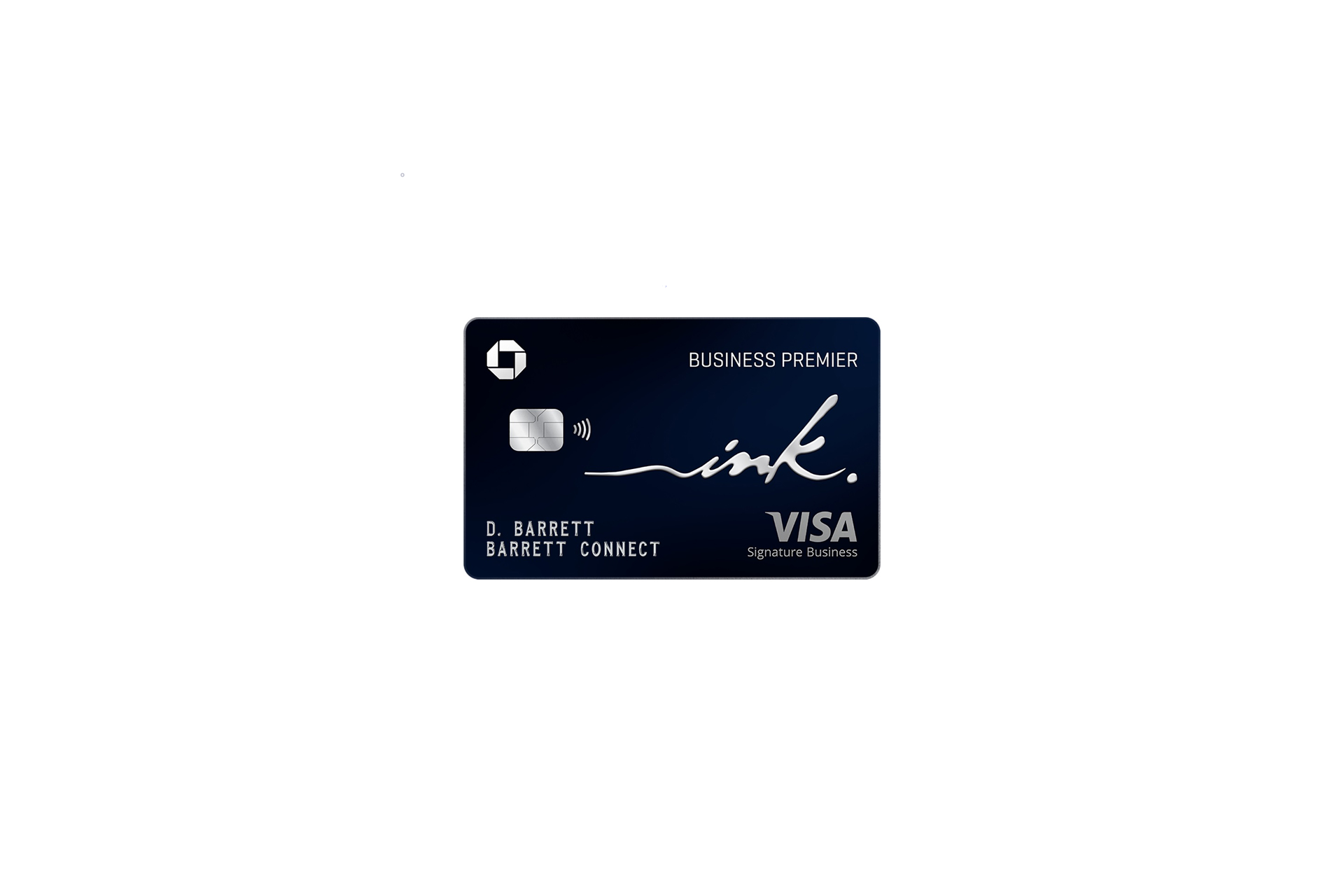
Chase has soft-launched a new business card: The Chase Ink Business Premier. The card has been anticipated for some time and is available for in-branch application but will launch for all small businesses – both in-branch or online – starting in January.

Chase Launches Ink Business Premier Card for In-Branch Applications

Chase has had a busy Q4 in 2021. The bank recently launched its anticipated Aeroplan® World Elite Mastercard® earlier in December, plus made several holiday-centric spending bonuses for its Freedom family of credit cards and through its Pay Yourself Back program.

Now, Chase is rolling out another new credit card – this time for businesses. Chase has soft-launched a new Ink card: The Chase Ink Business Premier. The Premier, which features a $195 annual fee, is only available in-branch and requires a business relationship manager to apply.

Chase Ink Business Premier Details

While the full launch of the Ink Premier isn’t until some time in January, the full details of the card are known. Here are the stats on the new Ink Business Premier:

  • Earn 2% cash back on all purchases
  • Earn 2.5% cash back on purchases of $5,000 or more
  • Earn 5% cash back on travel purchases through Chase Travel
  • No foreign transaction fees
  • Complimentary employee cards
  • Cell phone protection of up to $1,000 per year
  • $195 annual fee

The Ink Business Premier also comes with a $1,000 cash back statement credit after businesses make at least $10,000 in purchases with their cards within the first three months of account opening.

Interestingly, the Ink Premier looks like a charge card and not a revolving credit card. This would mean that companies could not carry a balance like a traditional credit card but would need to pay the balance in full every month. This makes the Ink Premier like the Capital One® Spark® Cash Plus for Business, which launched earlier this fall and features a similar annual fee ($150).

Chase will provide something called Flex for Business, which is a pay-over-time feature that operates in the same way as Amex Plan It or Chase’s own My Chase Plan.

Related Article: Chase, Southwest Extend Credit Card Partnership

Features image by Chase

Embily Joins Visa’s Fintech Fast Track Program

Embily USA Joins Visa’s Fintech Fast Track Program crypto

Last updated on September 5th, 2023

The crypto debit card space will get more crowded in 2022, thanks to a new partnership between European fintech Embily and Visa. The new partnership sees Embily USA joining Visa’s Fintech Fast Track program – gaining access to industry-leading experts, technology, and more.

Embily USA Joins Visa’s Fintech Fast Track Program

Europe-based fintech Embily is the latest firm to join Visa’s Fintech Fast Track program. According to reports, the new partnership will see Visa help Embily USA launch its prepaid debit card product in the country as soon as Q1 of next year. The move will grant the firm access to Visa’s payment network and enable faster onboarding times, expediting the scaling of its business model.

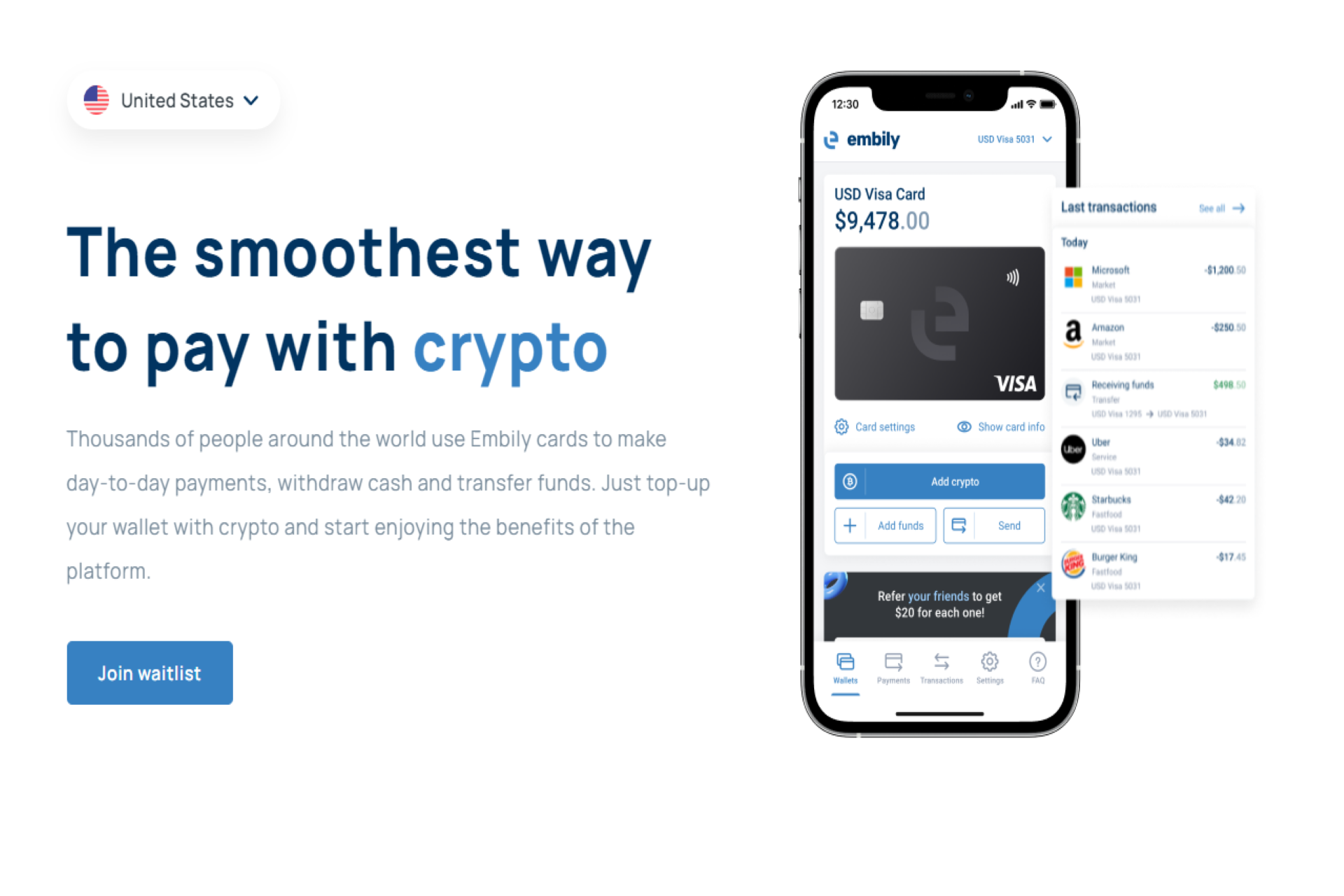
Embily will introduce physical or digital prepaid cards that can be loaded with Bitcoin and other cryptocurrencies. Funds are then liquidated using a third-party exchange, after which they are ready to be spent anywhere Visa is accepted. Users can also withdraw cash from any ATM with their physical debit card.

Joe Sasenick, CEO of Embily USA, declined to comment to Bitcoin Magazine on which third-party exchange his company uses, saying it comes down to the option that provides ”the most liquidity.”

“I don’t want to breach any security protocols by answering in detail the money flow and which we use, but it is one or more exchanges that have a neutral or positive reputation in the space,” Sasenick said. “We will be happy to announce once things are finalized.”

“Unprecedented Access to Visa Experts”

“By joining Visa’s Fast Track program, exciting fintech like Embily USA gain unprecedented access to Visa experts, technology, and resources,” said Terry Angelos, SVP and Global Head of Fintech at Visa, in a statement. “Fast Track lets us provide new resources that are rapidly growing companies need to scale with efficiency.”

“This card is currently available to almost every country except the U.S.,” Sasenick added. “We have a euro Embily card that serves almost every part of the world and a couple more entities we are building out to provide this service for as many countries as possible. Embily USA, Inc. expects to have a product fully launched in Q1 2022.”

About Visa’s Fintech Fast Track Program

Visa’s Fintech Fast Track program seeks to accelerate the integration process of fintech companies into the traditional credit card space. The program has seen numerous product launches, including the BlockFi Rewards Visa® Signature Credit Card. Visa has also used the program to fund successful brands, including a multimillion-dollar round of funding for Deserve just last month.

Related Article: BlockFi Rewards Flex Offers Choice of Up to 5 Cryptos

Featured photo by Embily

How Does the Credit Card Balance Transfer Process Work?

how does the credit card balance transfer process work

Last updated on March 8th, 2023

If you find yourself drowning in credit card debt, you may have considered transferring your balance in order to eliminate your existing debt. While they can be a good idea if used responsibly, balance transfer credit cards come with a few caveats that could put you even further in debt over time if you don’t go into the process with a clear plan to pay off your debt. Here’s how the credit card balance transfer process works, and how you can use it to get out of debt.

What Are Balance Transfers?

Anyone carrying hefty credit card balances from month to month may start having balance transfer offers from credit card issuers filling their email and physical snail mail inboxes. Though the idea of paying reduced card charges may be very enticing, knowing how a balance transfer works is paramount to pulling yourself out of the hole that is financial debt so that you can clearly see your goals ahead of you.

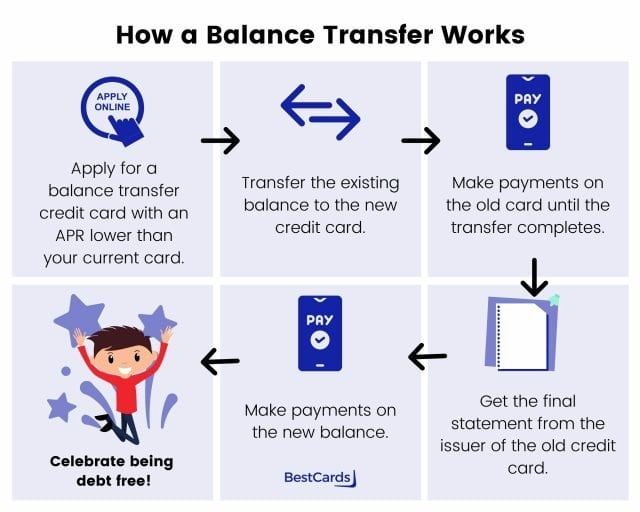
A balance transfer is a process of using one credit card to pay off the debt accumulated on another credit card, often at a much lower monthly payment due to reduced interest costs. The best way to begin going about this process is to compare the introductory period balance transfer APRs of credit cards you are considering.

There are databases and intuitive tools available online to help you do so, such as those available at BestCards.com. When reading the terms and conditions of these credit cards, it’s also important to note the balance transfer fee that these cards charge in addition to the intro balance transfer APR rate, the length of this introductory period, and standard interest rate that applies after that.  All of these details and others are clearly listed in the Schumer Box found within the terms and conditions.

balance transfer infographic

Consistency consistently equals results. Spending hours examining credit card T&Cs or paying your financial planner to do so and determining a plan to get out of debt is worthless if you don’t stick to it. As easy as it is to become dependent on them, opening up multiple credit cards in order to put off paying off other credit cards only makes things worse if you don’t have a plan and follow through.

Miss a payment, and you’ll cause a chain reaction that will put your credit score in worse condition than it was before. Do your research, determine your best course of action, and stick to your plan, and you should be out of debt thanks to your balance transfer credit card in no time.

Balance Transfer Tips

Here are some helpful tips to streamline the balance transfer process:

Form a Plan

Maxing out the credit limit on your cards, signing up for a balance transfer card, and making minimum payments until the introductory APR period ends isn’t a solid plan to get out of debt. It’s not even 12% of a plan. In fact, that kind of behavior will show up on your credit report and make it far more difficult to qualify for a balance transfer card or any credit card. Instead, before signing up for a single balance transfer credit card, it is recommended that you devise a clear financial plan to get out of debt.

Gather Data

As described earlier on, it is critical that you read your prospective credit card’s terms and conditions, paying extra attention to the information found in the Schumer Box. There, you’ll find the intro and standard balance transfer interest rates for the card, as well as the fee you may have to pay for transferring a balance.

Additionally, this is the time to assess your personal monthly budget and figure out a few financial truths. Realistically speaking, how much of your debt can you afford to pay each month? Are there frivolous expenses that you can cut back on in order to pay down this debt faster? What are you willing to compromise on now in order to avoid paying interest for years to come? After answering these tough questions and determining the numbers you can work with, you can begin devising a plan.

Set Realistic Goals

With a balance transfer credit card, the ideal goal is to pay off your debt in its entirety before your introductory period ends. Aside from fast-tracking you to the land of financial freedom, this also gets rid of the standard balance transfer interest rate payments that you’d otherwise be paying after the fact in addition to your original debt.

The trick is to find the balance transfer credit card with the longest balance transfer period, lowest balance transfer fee (if any), and lowest standard balance transfer APR. You may have to compensate one of those perks for another, but with the knowledge of what each card offers and what you can realistically pay each month, you’ll be able to eliminate your options until the best one emerges. Calculators can be found online to help you figure out these factors, as are financial planners that will do the legwork for you for a fee. Now comes the tricky part.

Related Article: The Best Balance Transfer Credit Cards

Chase, Southwest Extend Credit Card Partnership

chase-southwest-extend-credit-card-partnership

Last updated on March 8th, 2023

Chase and Southwest are extending their co-brand credit card relationship. The news of the extension came during an investor’s call earlier this week and included news of new routes, new fares, and more.

Chase and Southwest Airlines Extended Credit Card Partnership

Southwest Airlines and Chase have extended their co-branded credit card partnership. The news, while unsurprising, is good news for both the leading low-cost carrier and Chase, as the partnership has resulted in a wildly successful suite of co-branded credit cards for businesses and personal travelers.

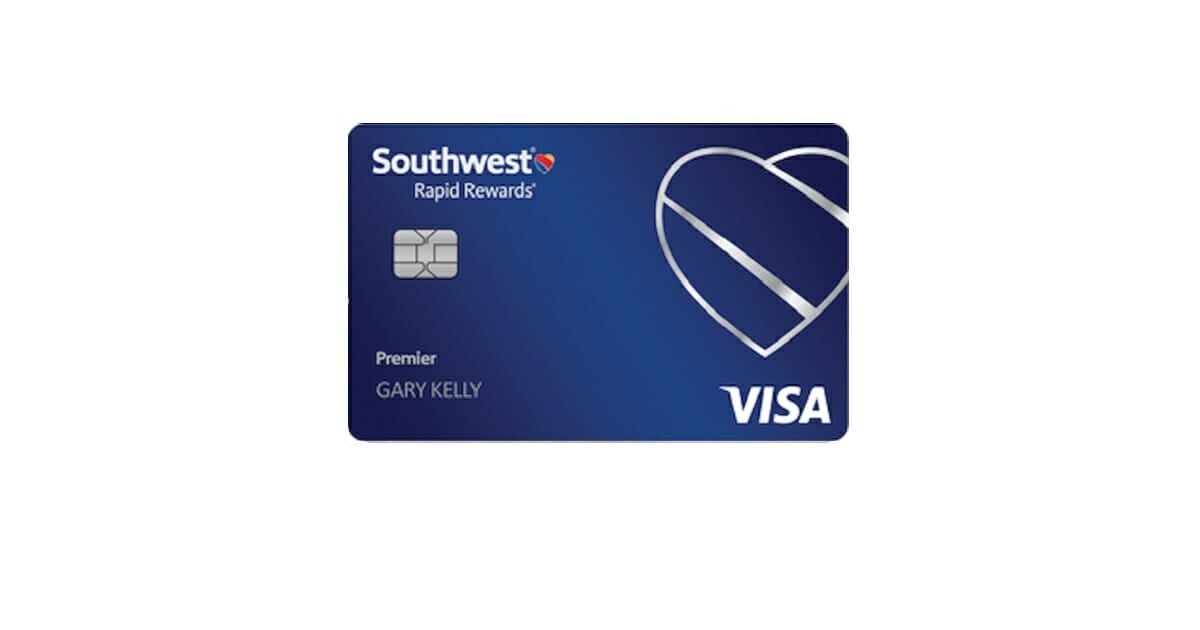
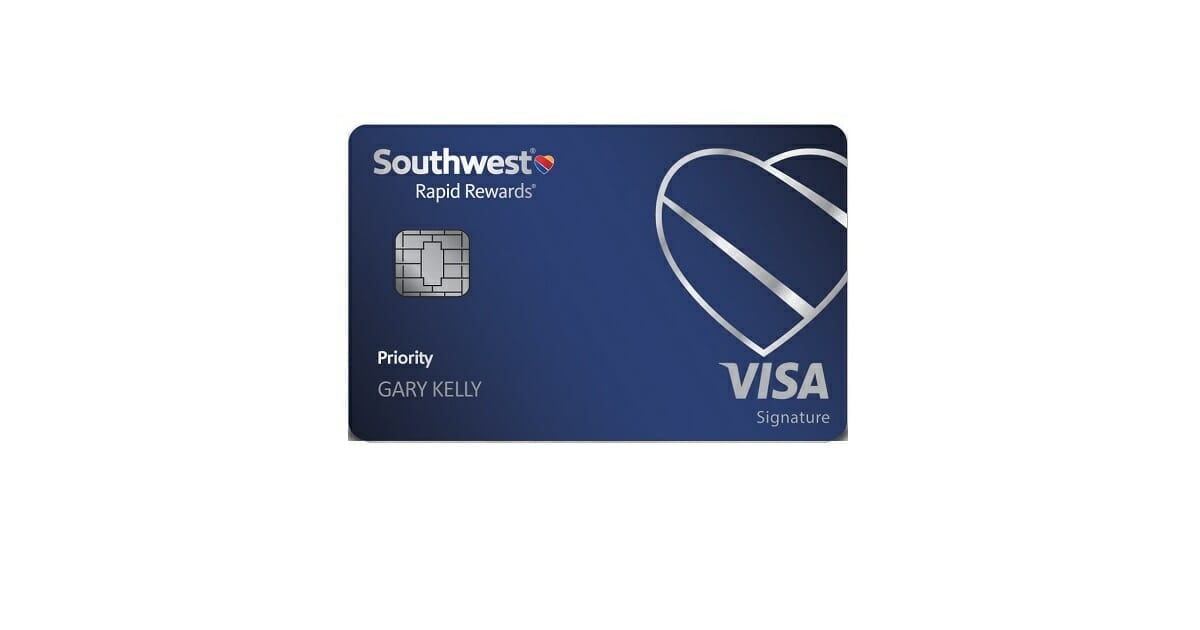
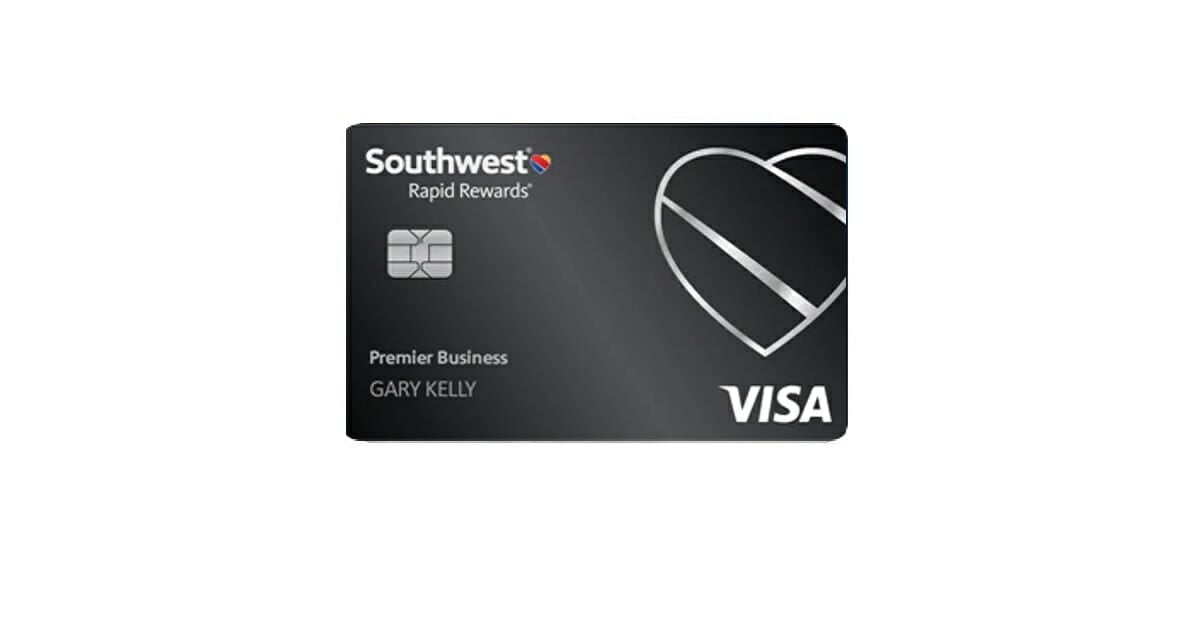
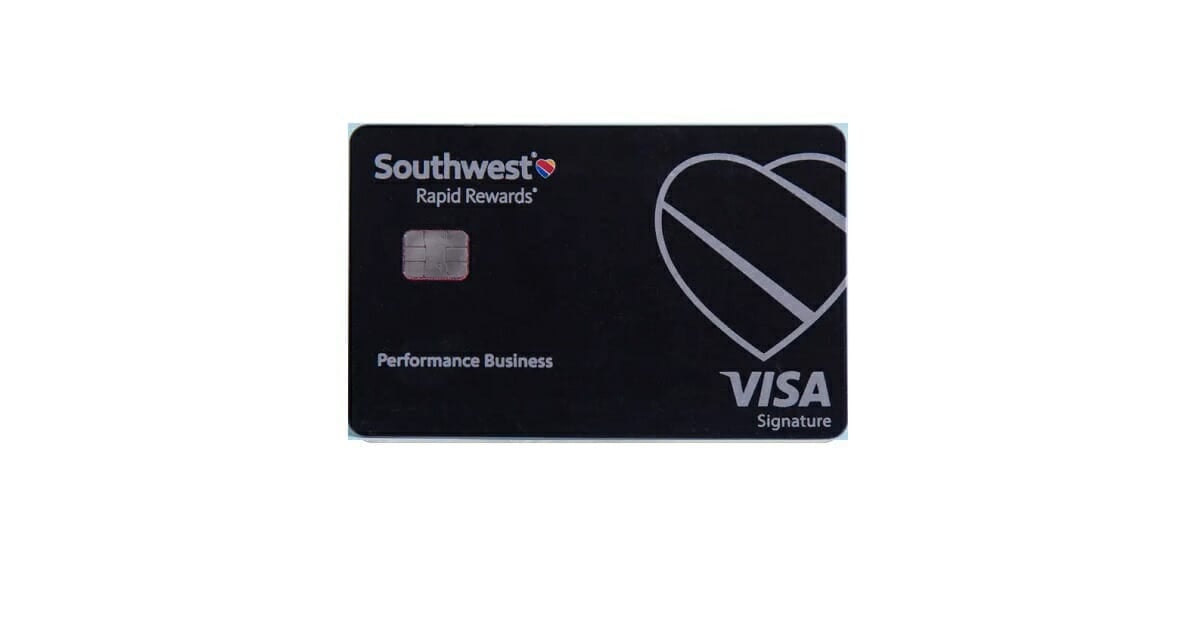
Chase’s co-branded Southwest Rapid Rewards credit cards offer impressive perks, including priority boarding, upgraded booking vouchers, and in-flight savings. The cards frequently provide lucrative sign-up bonuses – with recent offerings including up to 100,000 bonus Rapid Rewards points, temporary Companion Passes, and more.

Southwest Airlines is extremely popular amongst frequent flyers. The airline carries a higher percentage of award passengers than any other U.S. Carrier, according to its annual SEC 10-K disclosed to the federal government.

Here are Chase’s current Southwest branded credit card offerings:

While the decision to continue the partnership with Chase was likely, Southwest had been courting interest from other banks in recent months. This process, however, was more of a negotiations ploy than a serious attempt to forge a new partnership.  Co-branded partnerships are notoriously expensive, meaning there are only a handful of card issuers big enough to shoulder the costs, with Chase among the premier in the industry.

Other Southwest Annoucnements

Southwest also announced new non-stop routes during its investor’s presentation. The new services, set to begin in April 2022, will include:

  • Austin, TX – Tulsa, OK
  • San Antonio, TX – Oklahoma City, OK
  • Syracuse, NY – Tampa, FL

The low-cost carrier also has plans to introduce a “new fare product” midway through 2022, according to USA Today. The new fare, which would be a the most expensive fare, would appear in a fourth column alongside Southwest’s current Wanna Get Away, Anytime, and Business Select tickets. The new fare is expected to launch in mid-2022.

Related Article: The Ultimate Southwest Rapid Rewards Program Guide

Featured image by ArtisticOperations/ PixaBay

Chase Freedom Offering 5% Back on Lyft

Chase Freedom Offering 5% Back on Lyft

Holiday shopping and gift-giving can significantly dent personal or family finances. To start the new year on the right foot, Chase is advising eligible customers to take advantage of the great benefits Chase Freedom has to offer – including excellent cash back rewards on every purchase!

Chase Offering 5% Back on Lyft

Chase Freedom Flex and Chase Freedom Unlimited are currently offering cardmembers 5% cash back on Lyft rides through March 2022. For those who depend on rideshare throughout the year, including to-and-from holiday parties, that’s an impressive saving that is tough to beat.

Additionally, eligible Freedom family cardmembers can turn into savvy spenders by using their Chase Freedom Unlimited and Flex credit cards to earn 5% cash back on travel purchased through Chase’s Ultimate Rewards portal and 3% cash back on both dining and drugstore purchases.

Everyday Savings This Holiday Season

Chase’s Freedom cards also provide everyday value this holiday season. For example, Freedom Flex cardmembers enjoy 5% cash back on the first $1,500 in spending on Walmart and PayPal through December 31. The deadline for activating the Q4 5% back categories is December 14.

The Freedom Unlimited also earns 5% back on travel through Ultimate Rewards, plus 3% cash back on both dining and drugstore purchases. Plus, whichever card you use – you earn cash back on everyday spending: 1.5% on Freedom Unlimited and 1% on Freedom Flex. Cardmembers can also save at top merchants by taking advantage of Chase Offers – cardmembers can find personalized offers by visiting the Chase Mobile app or on Chase.com.

As mentioned earlier this week, Chase cardmembers are also running out of time to take advantage of Chase’s special Pay Yourself Back promotion. Cardmembers enjoy 10% more value when they redeem rewards for wholesale club and department store purchases through Pay Yourself Back (up to $500, through the end of 2021).

Related Article: The Best Credit Cards for Holiday Travel (and Making It Less Miserable)

Featured image by lorikoenig/PixaBay

Amex & Nova Team for New Credit Passport

amex credit card for recent immigrant

Last updated on February 15th, 2024

American Express and Nova Credit are joining forces to make establishing credit in the United States just that much easier. Using Nova’s Credit Passport program, Amex hopes to ease the transition from foreign credit to U.S. credit for citizens of nine countries. 

Amex and Nova Partner to Expand Credit Reach for Recent Immigrants

Establishing credit in the United States can be daunting for recent arrivals. The American credit system’s typical requirements (a valid Social Security Number or EIN tax ID number) make qualifying for traditional credit cards difficult.

Now, thanks to a new partnership with Nova Credit and its Credit Passport program, American Express is looking to make it easier to establish U.S. credit for the first time. The new program will see Amex make getting approved for credit cards through Amex made easier for citizens of select countries.

How Nova’s Credit Passport Works

Nova’s Credit Passport works by ‘translating’ foreign credit reports into an equivalent U.S. credit report and score. Nova created its system in 2019 to help recent arrivals from Australia, Canada, India, Mexico, and the U.K. establish credit in the United States for the first time.

The new partnership will see the list of eligible countries expand to include Brazil, Nigeria, the Dominican Republic, and Kenya. Amex expects to add even more names in 2022, though the company did not list any potential additions.

“When deciding whether to approve or decline an applicant for an American Express Card product, we consider many factors, such as the applicant’s credit score, delinquencies and defaults on their credit report, their debts with other lenders, our experience with them as a former/current American Express customer, fraud review, and other eligibility requirements,” said Sara Milsten, Senior Vice President of New Member Acquisition, U.S. Customer Service at American Express told ZDNet in an interview.

Immigrants and Credit in the United States

Numerous fintech firms have sought to make access to credit easier for recent immigrants, but Amex and Nova’s partnership will see this goal taken to the next level. Deserve is one such fintech, offering its Deserve EDU and Deserve PRO credit cards to a wider selection of applicants – including recent immigrants to the United States. Other options include the OpenSky Secured Visa Credit Card, Jasper Mastercard, and the Tomo Card.


Featured image by Skitterphoto / PixaBay

Last Chance to Activate Chase 5% Cash Back Categories

chase freedom q4 2021 5% cash back walmart paypal

Last updated on February 20th, 2024

Chase Freedom Flex and Chase Freedom cardmembers are running out of time to take advantage of Q4 2021’s 5% cash back categories. The bank is alerting customers that they only have until December 14 to activate 5% savings at Walmart and PayPal this holiday season.

Time Running Out to Activate Chase Freedom 2021 5% Cash Back Categories

Chase has a holiday message for Freedom Flex and Freedom cardmembers: activate your Q4 5% cash back categories before it’s too late.  The deadline to register for Q4s 5% back categories is December 14, meaning cardholders only have a few days left to register and save this holiday season.

The 2021 Chase Freedom Cash Back Calendar runs until December 31, 2021, with the Q4 categories being Walmart and PayPal. Both categories offer exceptional value for cardmembers – especially with holiday shopping in full swing.

Eligible cardmembers earn 5% on up to $1,500 in combined purchases in these categories, with PayPal earning even more. As an extra bonus for savvy spenders, Chase is upping the ante with even more cash back: purchases through the top spend category of PayPal will earn a total of 9% cash back.

Chase’s Month of More

Chase cardmembers are also running out of time to take advantage of Chase’s special Pay Yourself Back promotion. Cardmembers enjoy 10% more value when they redeem for wholesale club and department store purchases via Pay Yourself Back. This promotion runs through the end of 2021 and only applies up to a maximum of $500 in each category.

The special Pay Yourself Back bonus is the final remnant of Chase’s Month of More promotion from November. That promotional push provided eligible Chase cardholders with exclusive savings on Apple products when using Ultimate Rewards points, special cash back bonuses with select retailers, and more.

Featured image by Nicole De Khors/Burst

Advertiser Disclosure

BestCards is an independent, Florida-based credit card comparison platform. Many of the card offers that appear on this site are from companies from which BestCards receives compensation. This compensation may impact how and where products appear on this site (including, for example, the order in which they appear). BestCards does not include all card companies or all card offers available in the marketplace.