
Credit Score Basics

credit score basics

Last updated on August 14th, 2023

A credit score is an essential aspect of your financial reputation. If you’re planning to buy a car, apply for a mortgage, or apply for a credit card, the financial institution you go to will consider your credit score before making a decision on your application. Read on to learn what a credit score is, what it’s made of, and how to interpret it. Here are some credit score basics:

Credit Score Basics: What is a Credit Score?

A credit score is a three-digit number that summarizes your credit history and represents how much of a risk you pose as a borrower of a lender’s funds. The higher the score’s number, the less likely you are to default on a loan or line of credit, and therefore, the more favorable your chances are of being approved for the loan or credit line. Better credit scores also mean lower interest rates and higher credit limits.

While a credit score does not paint the entire picture that is your credit history, it is a quick and reliable indicator of how financially responsible you are.

Credit Scores vs Credit Reports

Credit scores are determined based on your credit report, therefore they are not the same thing. Credit reports are created by the industry’s three major credit bureaus: Equifax, Experian, and TransUnion. Credit reports for an individual may vary slightly between these three agencies, so it’s not uncommon for each to assign distinct credit scores. When you apply for a credit card or loan, issuers will consider both your complete credit report along with your credit score as an overall assessment of said credit report.

Credit Score Basics: What Makes Up a Credit Score

A credit score is comprised of a mixture of factors based on your personal information and previous, as well as current, financial activity. This data is available in your credit report. Payment history and current debt amount are the biggest determining elements when formulating one’s credit score, while credit history length, new credit, and credit mix make up the rest of the equation. Here’s a brief explanation of each:


Payment History


Current Debt Burden


Credit History


New Credit


Credit Mix

Here’s a more detailed breakdown of each determining factor of your credit score:

  • Payment History: How long you’ve been making payments on past and current debt. The more on-time payments you’ve made, the better you look to lenders. 
  • Current Debt Burden: Ideally you want to owe as little as possible. Having substantial existing debt will reflect negatively when calculating your credit score.
  • Credit History: Having several years’ worth of borrowing and repaying money shows that you’re financially responsible and have been so long enough to make you a trustworthy borrower. 
  • New Credit: It is generally good practice not to open several credit accounts within a short time span. Doing so will make you look like a riskier borrower. 
  • Credit Mix: Mortgage loans, auto loans, retail accounts, and other instances of money lent are all looked at in order to form a transparent profile of a consumer.

Credit Score Models

The most established and popular credit score is the FICO Score. The majority of lenders refer to it when evaluating credit or loan applications, and it is the most readily accessible to consumers.

FICO scores are developed by Fair Isaac Corporation, known almost universally, and simply, as FICO. The company creates different credit scoring models used by lenders in different industries. For instance, auto loan lenders may use one model while mortgage lenders may use another. FICO’s scoring models do not vary wildly; they are merely fine-tuned so lenders can make more informed decisions regarding borrowers.

fico credit factors
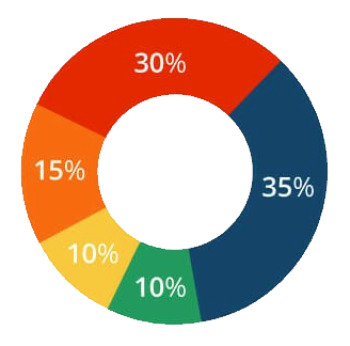
FICO Scoring Factor % of Score
Payment history/ late payments 35%
Total amount owed on credit accounts 30%
Average length of credit history 15%
Types of credit accounts 10%
New credit applications (hard inquiries) 10%

Another credit score model, relatively recent and on the rise, is the VantageScore. This model was developed by Experian, Equifax, and TransUnion, and simply offers another angle with which lenders view and evaluate applications. Both scoring models range from 300 to 850 but factor in different elements. Here’s how VantageScore weighs different aspects of your credit health:

VantageScore factor % of Score
Payment history/ late payments 40%
Credit depth 21%
Credit utilization 20%
Total balances 11%
Recent credit 5%
Available credit 3%

Credit Score Basics: Getting Your Credit Score

You can get your credit score through various channels. MyFICO.com allows you to purchase your FICO Score, though you can also get it through any of the three credit bureaus. In addition, there are websites that offer free access to credit reports, such as CreditKarma.com and CreditSesame.com. Some credit card issuers offer access to your FICO Score via their cards’ monthly statements, making it more convenient for consumers. Lastly, if you are denied credit or approved for lesser terms than you applied for, lenders are required to provide you with a copy of the credit score they used in their decision.

What Is the Average Credit Score?

While there are differing scoring models, the average credit scores of most Americans fit into a easily digestible credit score range. Here are the current average estimates of credit scores among American adults:

Credit Score Ratings % of Americans
300 to 579 Very poor 16%
580 to 669 Fair 18%
670 to 739 Good 21%
740 to 799 Very good 25%
800 to 850 Excellent 20%

How to Fix Your Credit Score

As the above demonstrates, a considerable number of Americans have a fair or bad credit score. The above statistics also don’t highlight the over 26 million Americans without a credit history (also called no credit score).

There are several ways to improve your credit scores and achieve a good credit score over time.

① Check your credit score The first thing you should do is check your credit score to see where you stand. You might already know your credit score is bad, but how far down on the scale, does it go? Knowing how fast you can improve your credit from “bad” to “fair” is crucial to making a financial plan of attack.
② Get a credit card for subprime credit Part of boosting your credit score is increasing your use of credit. For those with bad credit, this may seem counter-intuitive. Fortunately, there are many unsecured credit cards for poor credit and secured cards that can help you repair your credit score.
③ Pay on time each month As seen in the scoring models, payment history is the biggest factor in your credit score. Because payment history is so important, paying your credit card bill on time each month is essential to boosting sub-prime credit. Missed payments stay on a credit report for seven years.
④ Keep your credit use low Credit utilization is as important as paying on time. Credit utilization shows lenders how you use your credit. Those who keep their credit use below 30% can expect their score to improve, while those who use less than 10% can expect a much faster score rise.

Something to Keep in Mind

While credit scores and credit reports are the industry standard used by lenders when determining consumer risk, no measures are set in stone. No score is a guarantee of any particular outcome, and lenders all have different strategies that they use when evaluating applicants, as well as their own definitions of what amount of risk is acceptable to them.

We recommend you check your credit report periodically from one of the three credit bureaus, as well as your credit score from any of the resources mentioned above, to have an informed idea of where you stand. But remember that these data should be used as points of reference, not guarantees of any precise consequence.

Related Article: How Accurate is Your Credit Report?

Featured photo by QuinceCreative/ PixaBay

Big Banks May Offer Credit Cards to Those with No Credit History

big-banks-to-offer-credit-cards-despite-no-credit-history

Banks will begin issuing credit cards to applicants with no credit history as early as this fall. According to a report in the Wall Street Journal (WSJ), some of the country’s largest banks will begin sharing customer data regarding deposit accounts to improve access to credit. Here is what you need to know about the new collective pilot program from Chase, U.S. Bank, and Wells Fargo.

Chase, Wells Fargo, and U.S. Bank to Share Data to Improve Credit Access

Having no credit history is one of the biggest barriers to credit that Americans face. Now, three of the largest banks in the United States are seeking to extend access to credit through a collective pilot scheme, according to the WSJ.

J.P. Morgan Chase, U.S. Bank, and Wells Fargo are planning to “start sharing data on customers’ deposit accounts as part of a government-backed initiative to extend credit to people who have traditionally lacked opportunities to borrow,” the report states. The program, expected to launch this fall, is aimed at those Americans without credit history or credit score, but a demonstrable history of financial responsibility.

Under the joint pilot program, banks will share information about deposit accounts of applicants for credit cards, mortgages, and other credit products. This process will provide greater transparency on the financial responsibility of applicants instead of relying solely on credit reports and their banking history with that particular bank.

Big Banks Following the Examples Set by Fintech Credit Cards

The new program is a radical shift in how banks assess the creditworthiness of applicants. Previously, banks have relied on credit reports and scores from the major credit bureaus, Equifax, Experian, and TransUnion. While this process has been successful, it overlooks the more than 26 million Americans that are “credit invisible.”

According to the Corporation for Enterprise Development (CFED), approximately one in five Americans have no credit score. Another 31% have subprime credit, meaning over half the adult U.S. population has a poor or no credit score.

Adding new ways of judging the financial responsibility of credit card applicants is something the fintech sector has been innovating for several years. Credit cards like the Brex Corporate Card, SoFi Card, Jasper Mastercard, and others collect several types of economic data to judge the creditworthiness of applicants. Now, it seems, big banks are following suit.

Related Article: How Long Does It Take to Repair Your Credit Score?

Featured photo by Sarah Pflug / Burst

Capital One Savor and SavorOne Now Earn Even More Rewards

capital one savor savor one cash rewards streaming and grcoeries

Capital One is providing Savor and SavorOne Cash Rewards cardholders with even more value – effective immediately. Both cards now earn additional cash back on grocery store purchases and feature new cash back savings on select streaming services. Here are all the details of the new Capital One Savor bonus categories:

Capital One Savor Now Earns 4% Back on Streaming – and More

The Capital One Savor is one of the most popular premium cash back rewards cards on the market today. The card, which features a $95 annual fee, earns an unlimited 4% cash back on dining and entertainment, 2% back at grocery stores, and 1% back on all other eligible purchases.

Capital One is now increasing the value of the Savor Card by adding additional cash back on groceries and 4% back on popular streaming services.  Effective immediately, the Savor Cash Rewards Card now earns 3% back on groceries and 4% back on streaming services, including Disney+, Netflix, Hulu, and more.

SavorOne Cash Rewards Also Now Earns More

The Capital One SavorOne Card, the no annual fee version of the Savor, is also getting a facelift.  The SavorOne now earns 3% cash back on dining, entertainment, groceries, and streaming services. Previously, the SavorOne earned 3% back on dining and entertainment and 2% back on grocery store purchases.

Redeeming Capital One Cash Back Rewards

Thanks to the new cash back bonus categories, both Capital One Savor and SavorOne cardholders can enjoy even more value when redeeming their rewards. Capital One offers several redemption options for cash back cardholders, including the usual statement credits towards credit card bills, automatic direct deposits or checks, or gift cards from major retailers like Lowe’s Walmart, and more. Capital One cardholders can also use their rewards to make purchases through Amazon and PayPal simply by logging in and connecting their Capital One card account.

Related Article: Capital One Joins PayPal Pay with Rewards Program

Featured image by Tomáš Hustoles / Burst

How Accurate is Your Credit Report?

how-accurate-is-your-credit-report

Credit reports play a vital role in how millions of Americans receive financing every year. A bad credit score can mean thousands of extra dollars in interest payments over the course of a loan, making it a priority that the information on a credit report is 100% accurate.  So, how accurate is the information on your credit report? Here is what you need to know:

Just How Accurate Is Your Credit Report?

It turns out that all three major credit bureaus credit reports are pretty accurate – if a Federal Trade Commission (FTC) study is to be believed. The FTC surveyed 1,001 participants and discovered that just 2.2% of the credit reports studied have a material credit error. These errors – again, just 2.2% of all the credit reports looked at – would result in the consumer being placed in a higher-priced credit-risk tier.

The FTC study is backed up by a much more thorough report from the Policy and Economic Research Council (PERC) in 2011. The PERC study asked 82,238 participants to point out potentially incorrect information on the credit reports. Just 0.54% of those participating identified a mistake on their credit report successfully – significantly lower than the 2.2% of the FTC study.

Why Do So MANY Americans Think Credit Reports Are Inaccurate?

Why, then, do many Americans believe that credit reports are inaccurate? This belief stems from misreporting of the FTC study by major news sources.

One in four study participants in the FTC report stated they identified a credit report error on their report. The PERC similarly saw approximately 20% of respondents reporting errors on their credit reports that were not actually mistakes.

Because of this self-identification, many news sources wrongly claim that as many as 25% of U.S. credit reports have an error on them. This reporting, however, is misleading – and wrong.

Conclusion

So, how accurate are credit reports? Pretty Accurate if the FTC and PERC studies are to be believed. The PERC report highlights the efficacy of credit reporting – and the discrepancies of human error in its findings:

“This report helps explain the gap between widely cited anecdotal evidence that errors in credit reports are very common, and industry claims that the data contained in their databases are reliable and of high quality,” the authors wrote. “Although participants reported potential disputes in one-fifth of reports examined, and one-fourth of those who examined all three reports found a potential dispute in at least one of their reports, most modifications were minor or inconsequential.”

And for those errors found, there is something that can be done before there is a negative impact on your credit health. The FTC report highlights that 80% of Americans finding an error in their credit report saw a change when they filed a complaint. The PERC report states that 95% of Americans that disputed a credit report error were satisfied with their result.

Related Article: How to Dispute Errors on a Credit Report

Featured image by QuinceCreative / PixaBay

Credit Card Cash Advance Basics

credit-card-cash-advances-basics

Last updated on April 14th, 2023

We’ve all encountered that awkward moment where we’re in front of a street food vendor or a parking attendant, and we don’t have any cash on us. Mobile point-of-sale systems and apps like Venmo and forth have skyrocketed in popularity recently, but there still are plenty of instances where nobody wants to be caught without having cold, hard cash on them. The tempting thing to do may be to take your newly acquired travel rewards credit card to an ATM and make a cash advance to withdraw what you need so you can pay for your hot dog or parking spot, but there is a good chance the costs will outweigh the benefits. Here are some cash advance basics you need to know:

What Is a Cash Advance?

A cash advance is a type of financing, where you withdraw physical cash against your credit card balance to pay for a good or service that cannot be paid for directly with a credit card. Taking out a cash advance against your credit card balance is very different from using a debit card at an ATM.

Some cardholders may not know this but using a credit card to borrow cash to pay for something is more expensive than using a credit card to outright buy an item because of the extra transaction fees. Credit card companies treat cash advances differently than regular purchases, and they structure their interest rates differently with cash advances having much higher rates.

Cash Advance Basics: How Do Cash Advances Work?

Most banks and credit card issuers have three ways to make a cash advance. These are:

  • At an ATM
  • In-person at a bank branch
  • Through cash advance convenience checks

At an ATM

The most common form of cash advance is through an ATM. Conducting an advance through an automated teller machine requires contacting customer service ahead of time. Cash advances through an ATM require a PIN code. By calling the customer service phone number on the back of the credit card, you can set up a PIN and make future advances much simpler.

Once you have your PIN, conducting a cash advance at an ATM is the same as using your debit card. However, keep in mind that you can only borrow up to your cash advance limit and that the bank may limit the amount of money you can withdraw per day.

In Branch

Getting an advance at a local bank branch is another common way to conduct a cash advance. To make a cash advance at branch, you’ll need a photo ID and the credit card on hand.

Convenience Checks

Convenience checks are a third way to make a cash advance. This form of advance is less common, but some banks still mail these checks to customers. A convenience check is like a check from a checking account – just tied to the credit card account. Writing a check is also similar – you add the payee’s name and the transaction amount. However, you simply make the name on the check “cash” and cash it in a branch for a cash advance.

Related Article: How to Request a Cash Advance

Cash Advance Basics: Are Advances Worth It?

A cash advance might seem like the perfect way to grab some cash when your wallet is looking a little thin, but there are some serious drawbacks to considering taking one out. Here are some of the potential drawbacks on making a cash advance:

  • Increased Interest Rates: Compared to purchase and balance transfer rates, cash advances feature a high interest rate that have been known to top out near 27%. If the cash advance isn’t paid off immediately more interest can accrue over time, making that cash advance much more expensive as time passes.
  • Cash Advance Fee: Credit cards that offer cash advances charge a fee in the form of a fixed dollar amount or percentage of the transfer. They’ll usually charge either $5 or 3% of the amount of the cash advance, whichever is greater.
  • No Grace Period: Purchases made with a credit card typically have a 21 to 25-day grace period where cardholders have the chance to pay their full balance without accruing interest, but with cash advances, the balance immediately begins collecting interest.
  • No Introductory Rate Offers: Many credit cards offer special introductory rates such as 0% intro APR for up to 18 months on purchases and balance transfers, but they don’t do the same for advances.
  • ATM Withdrawal Fees: In addition to high interest and a fee, cardholders also must pay an ATM withdrawal fee to borrow cash. The credit card issuer may also issue an ATM fee.
  • Payment Allocation Rules: Cardholders who make the minimum payment will have it applied to the balance with the highest interest rate, but if the payment is above the minimum the credit card issuers can apply it to the lowest rate balance. This means it will take longer to pay off the balance.
  • Potentially Small Cash Advance Limit: Card issuers usually don’t allow cardholders to borrow against their entire credit limit. Instead, banks allow only part of the total amount of credit as available for advances, meaning it might not be worth the additional costs to take an advance as a form of short term loan.

What Are Some Alternatives To A Cash Advance?

Here are some potential alternatives to a cash advance is the high fees and immediate interest charges put you off:

  • Use Your Debit Card: Using your debit card at any ATM is a much better idea because even if you must pay an ATM withdrawal fee, you’ll save money on the Cash Advance Fee and the higher interest.
  • Borrow Cash: Find a friend or family member willing to lend you cash for your hot dog or parking spot, and offer to pay them back with a cash transfer app.
  • Take Out a Personal Loan: If you need to take out a more substantial amount of cash, consider looking into a personal loan with a friendlier interest rate. It’ll also give you more of a financial cushion to avoid needing to borrow more money.
  • Take Out a Small Business Loan: Individuals aren’t the only ones that consider cash advances. Many businesses use cash advances to let their employees access cash quickly during trips, or provide cash flow for quick deals. Small business owners who need more substantial amounts of available cash could consider a bank loan instead of a cash advance, as it may provide more liquidity than the line of credit the card issuer provides for cash advances.
  • Overdraw Your Bank Account: While not advisable, if payday is in sight, and you need some money to get you through a few days consider overdrawing your checking account. You’ll have to pay an overdraft penalty, but it’ll be substantially less expensive than paying a fee or interest, an ATM withdrawal fee, and a possible ATM fee from the issuer.

How Does an Advance Affect My Credit Score?

One last cash advance basic. Using a credit card to take out a cash advance doesn’t directly affect your credit score, but there are ways in which it can have indirect consequences. The higher interest rates associated with credit card cash advances only make it more difficult for cardholders to pay off their balance in full and get out of credit card debt if they’re having trouble financially. If they default on their credit card payments or fall behind on payments it will have a negative impact on their credit score. The only way for cardholders to have their credit scores not be negatively affected by taking out a cash advance is to immediately pay it back.

Related Article: Credit Cards 101

Featured photo by  Matthew Henry/ Burst

Can You Pay Off a Credit Card with a Credit Card?

Can You Pay Off a Credit Card with a Credit Card

Last updated on September 1st, 2023

Online systems allow credit cardholders to pay their rent and mortgage with their Visa, Mastercard, or even Amex card. With so much versatility with modern payments it seems like credit cards can do anything. But, can you pay off a credit card with a credit card? Here is what you need to know:

Can You Use a Credit Card to Pay Off Another Credit Card?

So, can you use a credit card to pay off another credit card? The answer is yes, and it is more common than you might think.

Balance Transfers

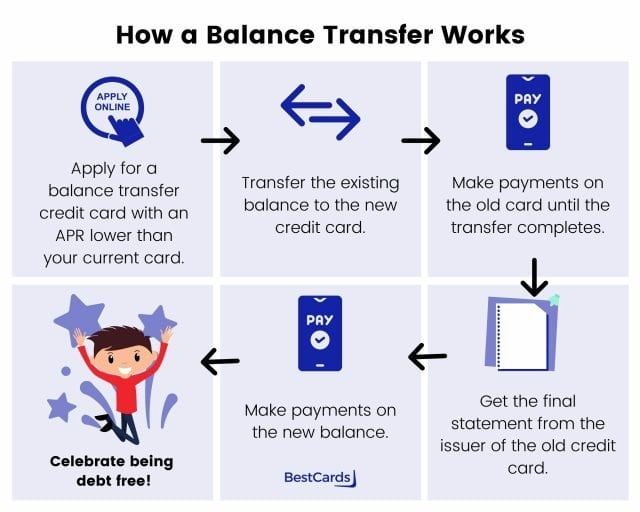
Consumers regularly pay off one credit card balance with a new credit card. This process is commonly known as a balance transfer. A balance transfer involves using one credit card to pay off the debt accumulated on another credit card, often at a much lower monthly payment due to reduced interest costs.

Balance transfers are an advantageous way of paying off another credit card balance because you can transfer the debt from a higher interest rate credit card to one with a lower rate or 0% intro APR period. Here’s how the balance transfer process works:

Before considering a balance transfer, here are a few things to carefully consider:

  • How long does the intro APR period last? While no-interest introductory rates are great, they cannot last forever. What happens if you can’t repay your entire balance during that window? Will you be able to meet the payments at the new regular balance transfer APR, or will you fall behind?
  • How long will it take to pay off the new balance? Before transferring any existing credit card debt, make sure you fully understand how long you will need to pay off the new debt.
  • What are the fees? Most balance transfers come with associated fees. These charges include a balance transfer fee (usually around 3% of the transaction cost or $5, whichever is greater) – always be sure to know all extra costs before making a balance transfer.

Related Article: Tips for Choosing a Balance Transfer Credit Card

Cash Advances

One unique way to pay off a credit card with another credit card is through a cash advance. A cash advance is a type of financing where you withdraw physical cash against your credit card balance to pay for a good or service that cannot be paid for directly with a credit card.

Using a cash advance can let a cardholder use their existing credit line to pay off some of another credit card. This, however, is not without its problems. Advances carry hefty fees (often around 5% of the advance or $10, whichever is greater) and feature interest rates significantly higher than purchases or balance transfers. Additionally, there is no grace period for a cash advance, meaning once you take money from one card to pay another, the first card will start accumulating interest immediately.

Online Payment Services

Another way you might think you’d be able to pay a credit card with a credit card is through online services that mask credit card payments as direct deposits or other banking transactions. Plastiq is one such unique service that individuals and businesses make payments with credit cards for various transactions not usually allowable with cards.

Services like Plastiq (others include Melio, GoCardless, and Thryv) let credit cardholders enter the information of the person (or company) they want to pay (including their direct deposit info) and their credit card and personal details.  The service then pays the recipient with the individual’s credit card.

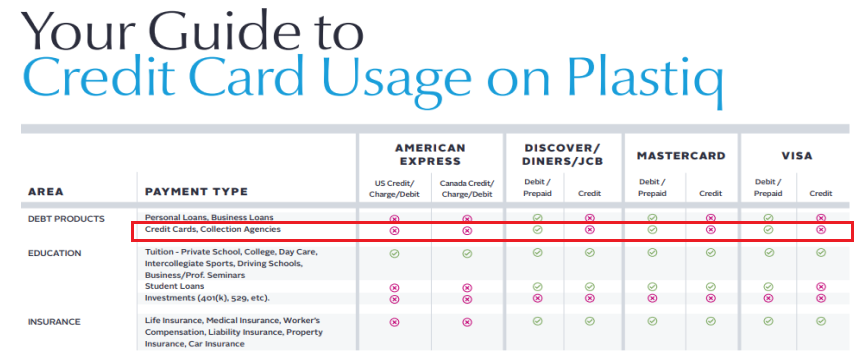
While services like Plastiq allow users to make payments “virtually anywhere,” one area they do not allow users to use a credit card is for paying off another credit card. As the image below shows, Plastiq does not permit any credit card payments with other credit cards, just debit or prepaid cards:

pay a credit card with another credit card

Conclusion

Can you use a credit card to pay another credit card bill? Yes, but it is much more complicated than that. Both cash advances and payment masking services might seem like ideal methods, but they cause significant problems, including huge repayment fees and interest charges.

Balance transfers are the most common way to pay off one credit card with another, newer credit card, but never rush into a balance transfer before weighing the costs carefully. Always consider the APR with the new card if there is any promotion APR on transfers – including zero interest charges for a set time – and fees for making such transactions.

Related Article: Can You Buy Cryptocurrency with a Credit Card?

Featured photo by mohamed_hassan / PixaBay

Amex Plan It® Launches for AmexTravel.com

Last updated on May 21st, 2021

Amex cardholders can now use Plan It® to book flights through AmexTravel.com and buy now, pay later. The rollout of the popular feature occurred last week and offers Amex cardholders the chance to spread their wings and travel – while spreading their payments out over time.

Amex Plan It® Lets Cardholders Buy Now, Pay Later

American Express offers cardholders the option to buy now, pay later through the Amex Plan It® feature.  The program allows Amex cardholders to split up large purchases over time and pay them back at a fixed, monthly fee – with no interest.

American Express first introduced Plan It® in 2017. The feature provides Amex consumer cardholders the ability to pay for purchases of $100 or more in monthly installments with a fixed monthly fee. Plan It® is available wherever cardholders’ shop and is controlled through the dedicated Amex mobile app. Cardholders simply log on to their account and select the Plan It® option when reviewing their posted transactions.

Amex Extending Plan It® Feature to Flight Bookings

Now, Amex allows cardholders to use the Plan It® feature with flight bookings through AmexTravel.com. This new feature makes it even easier for eligible cardholders to escape the coronavirus pandemic lockdowns with the flexibility to buy now – and pay later.

As of May 13, American Express cardholders can use their U.S. consumer card to book flights through AmexTravel.com and then select Plan It® at checkout. Amex says that integrating Plan It® directly into the checkout experience will offer more flexibility with up to three plans to pay for flight purchases of $100 or more in monthly installments with a fixed monthly fee and no interest.

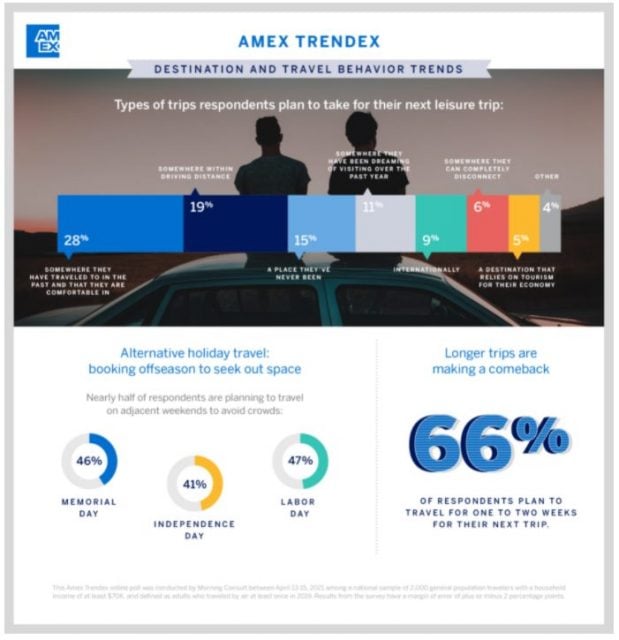
Trendex Study Shows Popularity of Buy Now, Pay Later Services

The addition of Amex Plan It® to flight bookings comes on the heels of the publication of the most recent Amex Trendex study. The latest report shows that over 40% of millennials have used a buy now, pay later service in the past year, with 82% saying that these offerings help them feel in control of their finances.

Additional findings from the Trendex study include:

  • 62% of millennials say they will use a buy now, pay later feature for their next trip.
  • 36% of people are looking for deals or flexible payment flexibility options to help with paying for their next trip, including buy now, pay later features.
  • 22% of all respondents have used a buy now, pay later service.
  • 82% of respondents that use buy now, pay later programs agree that those programs help them feel in control of their finances.
  • 79% of millennials feel more in control of their finances when they can spread their payments over time.
plan it

The Amex Trendex study is a monthly trend report from American Express that tracks how consumers, small businesses, and merchants feel about spending, saving, traveling, and more. The company offers regionally specific reports for consumers in the United States, U.K., Australia, Japan, Mexico, India, and Canada.

About American Express

American Express is a globally integrated payments company, providing customers with access to products, insights and experiences that enrich lives and build business success. Amex issues a variety of credit and charge cards for businesses and personal use, including the Platinum Card, the Gold Card, and co-branded cards with Hilton, Marriott, Delta, and more.

Related Article: Amex Waives “Pay It Plan It” Fees for Some Users

Featured photo by  Dan Gold / Burst

Brex Adds Crypto Redemption Option

brex mastercard bitcoin rewards

Last updated on May 27th, 2021

The Brex Mastercard® is a corporate credit card for startups, entrepreneurs, and small businesses. The card is one of many fintech credit cards that disrupt the way the traditional credit card space thinks about credit limits, rewards, and more. Now, Brex lets businesses turn their rewards points into cryptocurrency. Here is what you need to know about the new Brex crypto redemption options – and if they are worth it.

Brex Mastercard Introduces Crypto Reward Point Redemption Option

Part of the allure of the Brex Mastercard® is the card’s rewards program. The Brex Mastercard offers huge rewards on the types of purchases startups thrive on, including 7X points on rideshares, 4X on travel booked through Brex, 3X on dining, and 2X on recurring software purchases.

Like other reward programs, Brex offers an impressive array of award options for account holders. Brex cardholders can use points for 1:1 point transfers with several leading airlines or for the usual fare of statement credits, gift cards, and more via the TravelBank portal.

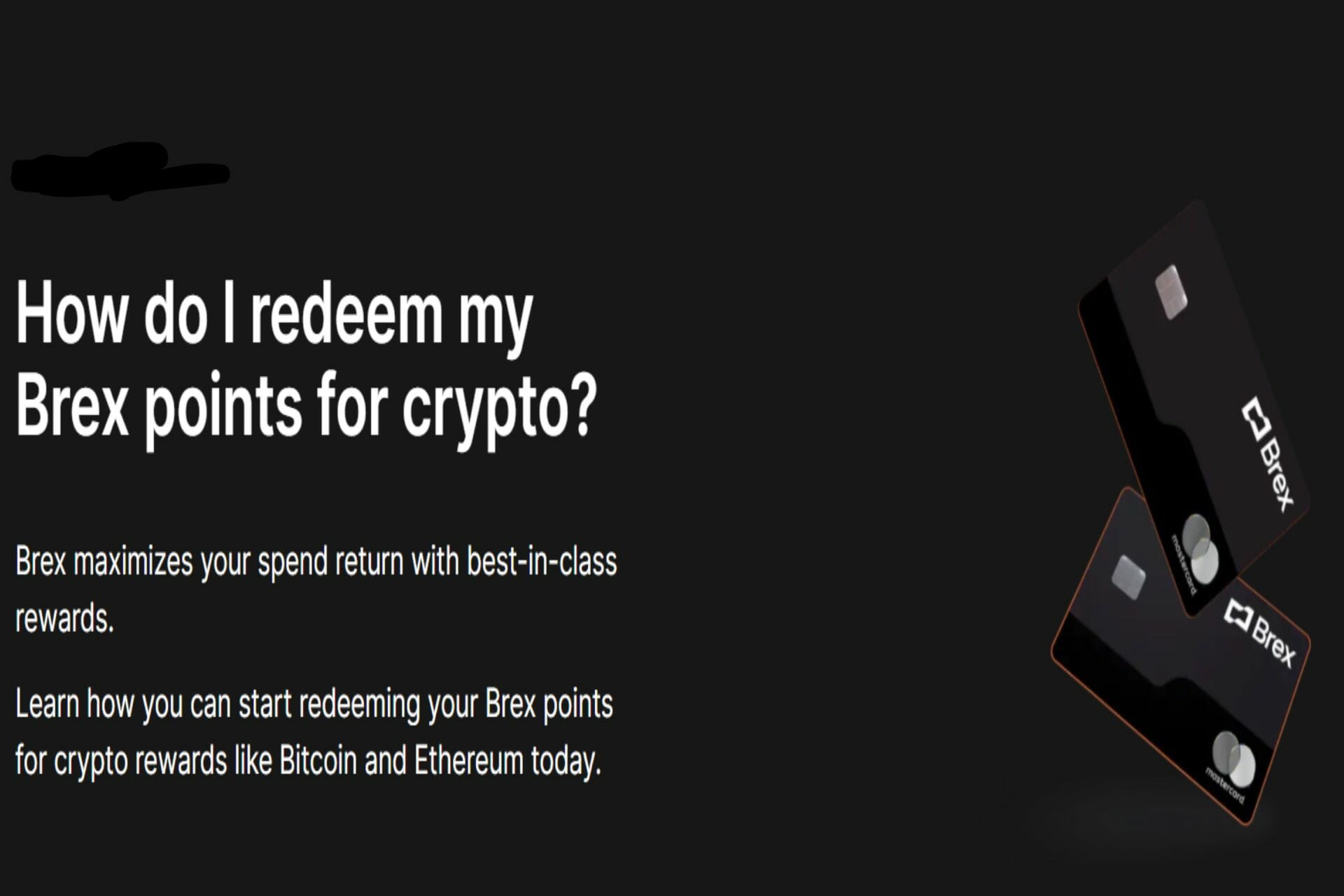
Now, Brex is jumping on the cryptocurrency bandwagon by letting cardholders redeem their points for digital currencies.  Cardholders can opt to receive their rewards as either Bitcoin or Ethereum at a value of 0.7 points per dollar of cryptocurrency. This point valuation is below the typical redemption value of Brex points – once cent per point.

How to Redeem Brex Rewards for Cryptocurrency

Redeeming points for Bitcoin or Ethereum with Brex is straightforward. Accountholders need a digital wallet, with Brex mentioning non-custodial wallets from Coinbase and Metamask as popular options.

Once the account holder has an eligible digital wallet, they simply need to log in to their Bex Rewards account, click “Redeem” on the side of the crypto they prefer (either ETH or BTC), and add their digital wallet address in the “Where to Deposit” section.

Things to Consider Before Using Credit Card Rewards for Cryptocurrency

While getting Bitcoin as a credit card reward is an exciting addition to the Brex lineup, there are several considerations cardholders should keep in mind before opting for a cryptocurrency award.

First, the valuation for the award type is relatively low compared to other options. At just 0.7 cents per point, cardholders might be better off opting for cash back and using those funds to purchase cryptocurrencies independently. Second, only Ethereum and Bitcoin are options for award points. While these are by far the most successful digital currencies, some entrepreneurs might prefer other options, like Litecoin or the trendy Dogecoin.

Perhaps the most important thing to be aware of before using Brex reward points for crypto is that errors with digital wallets cannot be fixed. As Brex states, the “wallet address you input has to correspond to the cryptocurrency of your choice. For example, suppose you wish to redeem your points for Bitcoin. In that case, you need to paste a Bitcoin network address. Since cryptocurrency transactions are irreversible, if you input an address from a different network, your funds will be lost.”

Related Article: Can You Buy Cryptocurrency with a Credit Card?

Featured photo by Brex

Amegy Bank Business Cards Offer Big Sign-Up Bonus

amegy-bank-business-cards-offer-big-sign-up-bonus

Last updated on May 20th, 2021

Amegy Bank of Texas is currently offering a $1,000 sign-up bonus on the Amazing Business credit card lineup. These new, limited-time bonuses apply to all three of the bank’s business cards and require meeting a minimum spend of $7,500 in the first 90 days. Here is everything you need to know about the new Amegy Bank AmaZing sign-up bonus offers:

AmaZing Sign-Up Bonuses on Amegy Bank Business Cards

Amegy Bank is a Texas-based bank that offers a variety of personal and business services and products. The bank is part of the Zions Bancorp family of banks, including other Western U.S. banks like Zions Bank of Utah, National Bank of Arizona, Vectra Bank in Colorado, and California Bank & Trust.

Amegy is now offering new business credit card accounts a sign-up bonus worth up to $1,000 cash back. The bank is currently listing two sign-up bonuses: one for the AmaZing Rewards Business Card and one for both the AmaZing Rate for Business and AmaZing Cash for Business cards:

  • Amegy Bank AmaZing Rewards for Business Card: New accounts earn 100,000 bonus reward points when they spend $7,500 on purchases within the first 90 days from opening an account. That bonus has a value of $1,000 towards travel, gift cards, statement credits, or cash back, as AmaZing Rewards points have a value of one cent per point.
  • AmaZing Rate for Business Card and AmaZing Cash for Business Card: Both the AmaZing Rate for Business and AmaZing Cash for Business cards also feature a similar sign-up bonus. New accounts earn $1,000 cash back after making $7,500 in purchases within the first three months (90 days) from account opening.

All three cards also come with a 0% introductory APR on purchases for the first six months.

Other Zions Banks Not Offering Similar Bonuses

Other banks within the Zions Bancorp Family of Banks are not currently offering sign-up bonuses remotely on-par with what Amegy offers presently. Vectra Bank, for example, is offering a $500 cash back offer on the AmaZing Rate for Business Credit Card and the AmaZing Cash for Business Credit Card, but no additional bonus for the Rewards Card. Both Zions Bank and National Bank of Arizona offer even smaller bonuses of $300 on the same cards, respectively.

Related Article: Chase Ink Celebrates Small Business with Savings All May

Featured photo by Karan Thukral / Burst

Unifimoney Launching New Unifi Premier Visa Signature Card

unifi money launching unifi premier visa signature card

Last updated on January 31st, 2024

Unifimoney is launching a new credit card that allows members to redeem their rewards as Bitcoin, gold, or equity. The Unifi Premier Visa Signature will debut later in 2021 with a phased rollout to Unifimoney customers. Here’s what you need to know:

Unifimoney to Launch Unifi Premier Visa Signature

Unifimoney is a leading fintech and investment platform that seamlessly integrates a high yield checking account, credit and debit card, and investing through its mobile app. Now, the company is taking its money management portfolio even further through the launch of the Unifi Premier Visa Signature.

The new Unifimoney credit card will launch in the third quarter of 2021, with current customers receiving preference over new members. A cash back rewards card, the new product will be the first of its type by a Fintech company competing directly with legacy Premium Travel Rewards cards.

The Unifi Premier Visa Signature is a joint venture between Unifimoney and Railsbank, the leading global Banking-as-a-Service (BaaS) platform. Beyond statement credits and the usual redemption methods, cardholders can opt to redeem their cash back rewards in three unique ways:

  • Bitcoin cryptocurrency
  • Gold (with the option of other precious metals being considered for future rollout)
  • Equity investment contributions

The Unifi Premier credit card will feature the typical Visa Signature perks and protections, including Visa Luxury Hotel Collection access, ID theft protection, auto rental collision damage waiver, and more. The card will also help the environment, as it is produced from recovered ocean plastic with contributions to the Ocean Foundation.

Fintech Firms Continue to Upset the Traditional Credit Card Market

The Unifi Premier Visa Signature launch is the latest in a growing trend of fintech companies disrupting the traditional credit card marketplace. Speaking about the card’s launch, Ben Soppitt, Co-Founder and CEO of Unifimoney, said the Unifi Premier Visa Signature is a game-changer in how consumers view – and use – their credit card:

“High-income professionals’ ability to efficiently manage and grow their wealth is limited by the need to manually work with multiple services and apps. To solve this problem, we created a comprehensive money management app to support the wealth ambitions and values of forward-thinking professionals who care about their financial well-being,” he said. “By combining simplicity, clear value, technical innovation, philanthropy, and sustainability in a credit card, we hope to help our community maximize their hard-earned money with rewards that invest in their future.”

Dov Marmor, Chief Operating Officer, Railsbank, North America, also sees the new card as pioneering in the credit card space:

“Banking as a Service has led to the reimagination of so many financial products, delivering fairer finances for all. Credit cards were the last holdout, until now,” he said. “Railsbank built Credit Card as a Service (CCaaS) to help companies such a Unifimoney bring their ideas to life with a turn-key, modern infrastructure, hassle-free. Ben and his team have a depth of experience and a wharf of amazing ideas to share with the world. We’re super excited to partner and pioneer!”

About Unifimoney

Unifimoney is an investment and money management platform. Its mission is to help build and protect the long-term wealth of millions of young professionals by taking out the effort and manual labor required to manage money optimally and automating the often repetitive and boring tasks involved.

Featured photo by Pierre Borthiry on Unsplash

Is Bitcoin the Future of Credit Card Rewards?

is-bitcoin-the-future-of-credit-card-rewards

Last updated on August 24th, 2023

Cryptocurrency news is everywhere these days. No matter where you turn, you cannot help but hear about Dogecoin, Ethereum, or Bitcoin. The latter is the most well-known of the cryptocurrencies – and the most valuable. As more and more fintech and credit card issuers turn towards unique rewards, what role will Bitcoin play in the future of credit card rewards?

What is a Crypto Credit Card?

Crypto credit cards, or credit card cards that offer cryptocurrency or Bitcoin rewards, are at the cutting edge of fintech credit cards. These cards operate the same as a traditional credit card – but with a unique rewards structure.

Crypto credit cards specialize in offering digital currency as a cash back reward. This rewards structure differs from other cash back credit cards, which give what is known as fiat money. Fiat money is a sophisticated way of saying “government-regulated currency,” and as such applies to rewards in U.S. or Canadian dollars, Euros, British Pounds, or however the card issuer distributes cash back rewards.

The premise behind crypto and Bitcoin credit cards is that they provide an easy way to earn additional crypto assets anywhere either Visa or Mastercard is accepted. In this regard, crypto credit cards and crypto debit cards differ significantly. A crypto debit card allows the user to spend their digital assets wherever the payment network is accepted, whereas the credit card option earns these digital assets.

Some of the more popular crypto debit cards include the Coinbase Visa Debit Card and the Crypto.com Visa Debit Card. There are also several debit and credit cards for crypto enthusiasts outside of the United States.

Which Bitcoin Credit Cards Are Currently Available?

There are currently two upcoming crypto credit cards: the Gemini Mastercard and the BlockFi Bitcoin Rewards Card. The BlockFi Card was the first Bitcoin credit card to be announced, and will provide the following benefits:

  • 5% Bitcoin rewards on all purchases.
  • $250 in Bitcoin after making $3,000 in purchases with the card within the first three months of opening an account.
  • $30 in Bitcoin for every client referral.
  • 5% Bitcoin rewards on all purchases from month four through six of card membership. This perk applies to up to $100 in Bitcoin.
  • An additional 2% APY on the cardholder’s average daily Stablecoin balance, up to $200.
  • 25% Bitcoin rewards on eligible BlockFi trades, up to a maximum of $500 in Bitcoin per month.

The Gemini Rewards Card will earn up to 3% back in rewards and feature the Visa payment network. The card recently hyped a new collaboration with digital artist, Beeple, to create a limited edition Beeple x Gemini Credit Card.

Both of these cards are currently in development, with potential applicants able to join a waitlist for each.

Are Bitcoin and Cryptocurrency Rewards the Future of Credit Cards?

The lack of current crypto credit card offers is telling. Sure, the crypto rewards space is new, but the difficulty in devising and developing rewards structures that work in real-time might be the biggest downfall for Bitcoin rewards credit cards.

So, is Bitcoin, or another cryptocurrency, the future of cash back rewards? While nothing is certain, the simple answer is probably not. The biggest thing holding crypto rewards back is their acceptance as an everyday payment method.

Most credit cardholders want cash back rewards they can use. Crypto simply doesn’t provide that versatility – yet. Sure, the value of crypto can rise significantly, but if you can’t apply those savings towards your bank account, for travel rewards, etc., what’s the point?

That said, there is plenty of room in the credit card marketplace for an alternative rewards system. And if the likes of Gemini and BlockFi can refine – and perfect – the crypto and Bitcoin rewards with their offerings, the future might just be digital after all.

Related Article: Mastercard Set to Offer Cryptocurrency Payments

Featured photo by Sarah Pflug / Burst

Report: Apple Cardholders Top More Than 6.4 Million Accounts

report-more-than-6-4-million-apple-cardholders

The success of the Apple Card continues, with 6.4 million cardholders to date. This impressive statistic represents a doubling of total accounts since last year, with women to thank, according to an analysis of Apple Card data by Cornerstone Advisors.   

Apple Card Now Has Over 6.4 Million Accounts

Over 6.4 million American consumers now have an Apple Card on their iPhone – and in their wallets. That is the latest information from a survey of credit cardholders in December 2020 by research firm Cornerstone Advisors.

The current figure of Apple Cardholder is impressive enough, but even more so compared to the same report a year earlier, which showed 3.1 million cardholders. The new figure shows that Goldman Sachs (the Apple Card’s issuer) saw total accounts double in 2020, despite the economic impact of the coronavirus pandemic.

Women Lead the Apple Card Charge

The new data also shows that women are to thank for the impressive growth of Apple Card in 2020. According to the data, just 25% of cardholders were women. That figure currently stands at around 42%, indicating that 80% of new Apple Cardholders are women.

The growth of the Apple Card amongst females is particularly impressive, given initial reports after launch that accused Goldman Sachs and Apple of offering lower credit limits to women than men.  While an investigation into the claims found no evidence, it would be understandable for such claims to cast a long, dark shadow on the card – that has not happened.

Other Findings

Other findings of note from the Cornerstone Advisors 2021 Apple Card survey:

  • Approximately half of Apple Cardholders also have a credit card from Amazon or PayPal. Amazon has two co-branded credit cards through Chase, plus a store card through Synchrony. PayPal also offers co-branded credit cards through Synchrony, the PayPal Cashback Mastercard and the PayPal Extras Mastercard.
  • Eight percent of Apple Cardholders are baby boomers as of 2021, up from just 3% in 2020.
  • Over 70% of Apple Cardholders are in their 20s and 30s.

About the Apple Card

The Apple Card is a unique cash back credit card that works within the Apple Wallet and iPhone ecosystem. The card, launched by Apple and Goldman Sachs in 2019, requires an iPhone to apply and offers up to 3% cash back on purchases – and 2% back wherever Apple Pay is accepted. The Apple Card features no annual fees, no hidden fees, and provides a detailed breakdown of your spending directly on your iPhone.

Related Article: Apple Card Now Reporting to All Major Credit Bureaus

Featured photo by Matthew Henry/ Burst

Advertiser Disclosure

BestCards is an independent, Florida-based credit card comparison platform. Many of the card offers that appear on this site are from companies from which BestCards receives compensation. This compensation may impact how and where products appear on this site (including, for example, the order in which they appear). BestCards does not include all card companies or all card offers available in the marketplace.