How to Negotiate a Lower Credit Card Interest Rate

how-to-negotiate-a-lower-credit-card-interest-rate

Last updated on August 24th, 2023

Do your finances have you feeling stressed out? Don’t worry; there are practical steps you can take right now to save money, including lowering your credit card interest rates. Here’s how to successfully negotiate a lower interest rate with your credit card company.

How to Ask Your Credit Card Company for a Lower Interest Rate

One of the best ways to save money is to call and ask your credit card company for a lower interest rate. Here are the five critical steps involved in the process:

Check Your Current Rate

The first thing you must do is to check your current interest rate. If you aren’t sure what your purchase APR is, check your monthly statement. Your statement is available through your card’s mobile app (if possible), or on your paper statement that you receive each month.

Check Your Credit Score

Your credit score is the figure that lenders use to gauge your risk as a borrower. The most crucial factor in both a FICO Score and VantageScore (the two most popular scoring models) is payment history. Both models base around a third of a total credit score on how dependable you are to pay your monthly bills on time.

Because of this emphasis, those with a record of consistent on-time payments have a higher credit score (on average) and pose a lower risk for lenders. This reduced risk makes lenders (and credit card companies) more willing to offer better interest rates when asked.

How Does Your Credit Score Match Up with the Average APR?

Once you know your credit score and your current APR, you should know how they match up with other cardholders.

Different credit scores enjoy different interest rates. Those consumers with excellent credit get the lowest rates, while those with subprime credit scores (fair credit, bad credit, or no credit) get higher interest rates.

The interest rate you pay also depends on the type of credit card you have. Rewards cards, for example, have higher interest rates than balance transfer credit cards, which often don’t feature rewards.

Not sure how your APR stacks up against other consumers with your credit profile? The easiest way to see if you deserve a lower interest rate is to check out our “What Is the Average Credit Card APR? page, which is updated continuously.

Contact Your Credit Card Company for a Lower Interest Rate

To request a lower rate from your credit card company, just call the customer service number on the back of your card. Discuss your concerns with their agents and state that you have both excellent payment history and a solid relationship with the lender.

Here are some helpful tips for when you negotiate with your credit card issuer:

  • Have your talking points written down in advance. This tactic will help you ensure you state your case clearly.
  • Always use the credit card company’s name and not “you” when speaking with a representative.
  • Have information about your credit score, average APR, history with the company, etc. readily available.
  • Be polite
  • Be flexible

What to Do If they Deny Your Request?

What happens if your bank denies your request? Your best recourse is to ask why they reached that decision. This question can help you better understand how lenders view you as a borrower and provide you with insight to form a game plan for improving your credit score.

If your payment history is an issue, consider getting a secured credit card to help increase the number of monthly payments you make. If you choose this option, make sure to use any new credit cards for small purchases only – and pay off the balance in full every month.

Another option might be a personal loan to reduce your overall monthly payments. A personal loan can consolidate multiple credit card payments into one simple payment – saving you time and money in the long term.

Conclusion

Reducing your monthly expenses may be as easy as calling your bank and negotiating a lower interest rate on your credit card. Before you call, however, make sure to check vital information to see where you stand. Once you have all the facts you need, call and speak with confidence – and politeness. If you are persuasive enough, you might save yourself serious money on interest payments each month. Plus, you never know if you don’t ask, so give them a call today!

Related Article: How to Increase Your Credit Limit

Can You Get a New Credit Card After Making Late Payments?

can-you-get-a-new-credit-card-after-making-late-payments

Last updated on September 21st, 2023

A new study published recently is highlighting Americans’ anxiety towards paying bills on-time, with many paying late. Late payments can severely hurt your credit score, making it harder to get financing and low interest rates in the future. Can you get a new credit card is you’ve made late payments? The short answer is yes – and here’s how:

Study Highlights America’s Late Payment Habit

Nobody likes paying bills. In fact, a new study shows that most Americans hate paying bills so much that they often pay them late paying – when they do make payments.

That study, conducted by the Aite Group, shows that six-in-ten Americans feel anxiety about paying bills. This anxiety leads almost half of those surveyed, 46%, to pay their bills late.

Paying bills late can have a variety of negative consequences. These adverse actions include:

  • Late fees
  • Penalty interest rates
  • Drops in your credit score

All these potential negatives are bad, but the hit to your credit score can be something from which it is difficult to recover.

Related Article: Here Is What Happens If You Don’t Pay Your Credit Card Bill

The Impact of Late Payments on Your Credit Score

Payment history accounts for up to 35% of your credit score. With FICO, the most popular credit scoring model for lenders, 35% of your score is determined by payment history. With VantageScore, the second most popular scoring model among lenders, your payment history accounts for 32% of the total figure.

Regardless of the scoring model, payment history is the most critical aspect of what makes up your credit score – and late payments can hurt you for several months, if not years. Late payments stay on your credit report for seven years, and even one missed payment can cause your credit score to plummet.

Even a steady string of on-time payments can struggle to offset late or missed payments, making credit repair seem impossible. That’s because, surprisingly, even having a payment history with 97% of on-time payments is enough to harm your credit score.

There is hope, however.

What Types of Credit Card Can You Get with Late Payments?

Making on-time payments with your existing credit card might not be enough to rebound from missed payments in the immediate term. Fortunately, there are practical ways to bounce back from late payments quickly. The first step – the one presently being discussed – is getting another credit card to supercharge your history of on-time payments.

Secured Credit Cards

One of the easiest ways to rebound from late payments is by establishing an overwhelming record of making your payments on time. With one credit card, it can be tough to piece together enough timely payments to outweigh the negative impact of those missed balance payments. Fortunately, secured cards offer an easy way to increase your overall number of timely payments.

A secured credit card is a unique type of card that requires a security deposit. This deposit, typically of $200 or more, acts as collateral for the line of credit and your credit limit. While this may sound like a prepaid card, there are distinct differences:

  • The deposit is your credit limit. When you make a purchase, you pay it off in the same way you would with any other credit card.
  • Prepaid cards act like debit cards. The balance you add makes up your total available funds. Once it is spent, you must reload.
  • Secured cards report to the major credit bureaus, allowing you to rebuild your credit with regular payments and low credit usage.
  • Prepaid cards can’t help you build credit.

The best way to use a secured credit card is to only make small purchases with it. Keep the balance low and repay the entire statement every month. In conjunction with other on-time payments, you can quickly overwhelm the negative impact of late payments and improve your credit score.

Related Article: What Are the Best Secured Cards for Rebuilding Credit?

Unsecured Cards for Bad Credit

You might think that a credit card that doesn’t require a security deposit is an impossibility with bad credit, but that’s actually not the case.

There is a vast assortment of subprime credit cards. Subprime refers to the credit profile that these cards are marketed to, namely those with bad credit or fair credit scores.

Many of these cards fall into a category known as “instant approval” credit cards. While “instant approval” makes it sound like anyone can get these cards automatically, that’s not quite true. Instead, it merely means these cards provide a quick application process and decision on your application comes in a matter of minutes. Some cards, like the Destiny Mastercard, provide pre-qualifications.

Unsecured credit cards for bad credit differ from secured cards in that they have no security deposit requirement. Because of this unsecured line of credit, however, credit limits tend to be low. The average credit limit for an instant approval card is around $300 to $400, for example. Many cards, like the Surge Platinum Mastercard or the First Digital NexGen Mastercard, also offer the chance at a credit limit increase with responsible use and on-time payments.

Related Article: What Are the Easiest Credit Cards for Bad Credit to Get?

Conclusion

Many Americans face severe anxiety when it comes to paying bills, resulting in almost half of consumers paying bills late. Your payment history is the most critical part of your credit score. Even one late payment can have a lasting impact on your credit report for years to come – including new credit cards.

However, even those with severely damaged credit can still quickly rebuild it through responsible credit card use. This process involves getting a credit rebuilder credit card, using it to make small purchases only, and paying the full statement balance, on time, each month.

Related Article: Can You Raise Your Credit Score 100 Points In a Month?

Apple Card Now Reporting to All Major Credit Bureaus

apple-card-now-reporting-to-all-major-credit-bureaus

Last updated on March 18th, 2021

When it initially launched, one of the strange features of the Apple Card was that it only reported to one credit bureau: TransUnion. Now, however, the card appears to be reporting to all three major credit bureaus regularly. Here’s what you need to know about the Apple Card and its reporting changes to the major credit bureaus.

Apple Card Reporting to Experian, Equifax, and TransUnion

The Apple Card has been a resounding success for the tech giant since its launch last year. The card, which Apple issues through Goldman Sachs, works through an iPhone’s digital wallet and its proprietary Apple Pay system. The card works wherever Apply Pay is accepted – and for those merchants that don’t accept Apple Pay, the physical titanium card comes in handy.

The digital payment focus of the Apple Card is a notable quirk of the product, but not its only peculiarity. Another curiosity of the Apple Card is that up to now it only reported one credit bureau: TransUnion. It seems that has now changed. The addition of regular reporting to all three credit bureaus is good news for cardholders who are looking to improve their credit score.

Monthly reporting to all the credit bureaus can help establish a record of on-time payments and low credit utilization for those willing to put the work in. This, in turn, will boost their credit score and approval odds on future credit card applications, regardless of the credit report the bank pulls. In addition, the update makes it more accessible when it comes to lenders that prefer using Equifax or Experian.

How Can You Tell Which Credit Bureau Your Credit Reports To?

Knowing which credit bureau your credit card reports to is a fairly simple process. Most credit cards offer complimentary credit scores each month – either through FICO Score or VantageScore. Closely monitoring your credit score can indicate where your credit cards are being reported.

Credit monitoring services will also detail where your credit cards are reported – especially when opening a new account. Check for changes, such as new account alerts, which indicate that your new credit card will be reported to that particular credit reporting bureau.

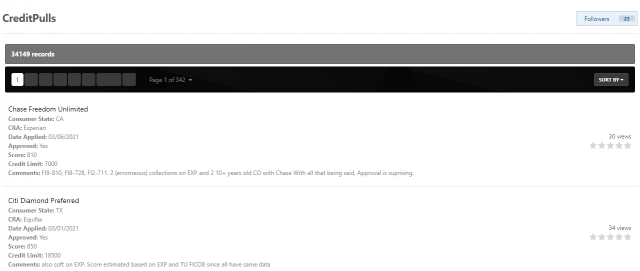
The CreditPulls database, created by CreditBoards is another useful resource. The free service lets users check to which credit bureaus their cards will report before they apply. 

apple credit report
The CreditPulls Database

When Do Banks Report to Credit Bureaus?

Beyond finding out what credit bureaus your credit card issuers report to, knowing when they report is also a valuable bit of information. Unfortunately, there is no set day of the month when your credit card habits are reported to the three major bureaus.

Reporting times depend on the bank. Most credit card issuers report to credit bureaus (usually more than one) every month, but some may report quarterly bi-monthly or even weekly.

However, using the once-a-month average makes it easier to gauge when your credit card balance is reported to either Experian, Equifax, or TransUnion (or a combination of those bureaus). Most banks will report on the statement balance closing date. This closing date refers to the minimum payment due date on your credit card statement, as well as the grace period (usually around 15 to 25 days).

More About the Apple Card

Apple Card Application and Credit Reporting and Score FAQS

The Apple Card is issued by Goldman Sachs. Goldman Sachs pulls an applicant’s  TransUnion credit report.

You’ll need a Good to Excellent credit score to get the Apple Card in most instances. The minimum credit score for Apple Card appears to be around a FICO Score of 600. 

Yes. Keep in mind, however, that you will need an Apple iPhone to apply for the card, as it works with the Apple Wallet. Android or Samsung phone users cannot get the Apple Card at the moment.

According to Apple, applicants must “be a U.S. citizen or a lawful U.S. resident with a U.S. residential address that isn’t a P.O. Box. You can also use a military address.”

Should You Apply for the Apple Card?

With the addition of regular reporting to all three credit bureaus, is the Apple Card worth getting for those on the fence?

The Apple Card is a quality cash back credit card for the Apple enthusiast who both has an iPhone and plans to stick within the Apple ecosystem. Getting an Apple Card requires an iPhone, as this is the only way to apply. And while there is also a physical, titanium credit card for purchases outside of Apple Wallet, those purchases only earn 1% cash back. Purchases through Apple Pay, on the other hand, earn 2% back – and purchases of Apple products receive 3% back.

If you are an Apple fanatic, however, the Apple Card’s lack of fees is an enticing proposition. Equally enticing is the card’s slick, laser-etched metal card, which will be the envy of all who look upon it. For all those who fall outside of the Apple sphere of influence, however, there are plenty of other cash back credit cards that offer far richer rewards.

Related Article: Best Credit Cards for Gym Memberships of 2021

Featured photo by JESHOOTS-com/ PixaBay

American Airlines Cuts Service to Smaller Cities?

american-airlines-service-cuts-to-smaller-cities

The CARES Act saved many airlines from bankruptcy. With funding ending, however, American Airlines may cut service at up to 30 smaller cities, according to a new report. Here’s what you need to know about the potential service reductions, and how they may impact current AAdvantage credit cardholders.

Report: American Airlines Cutting Services

Major airlines received billions in bailout funding courtesy of the CARES Act earlier this year. The Act, which also provided stimulus checks to millions of Americans, set the stipulation that airlines must maintain their services to all U.S. airports they previously operated at through September 2020.

With CARES Act funding ending by the start of October, CNBC is reporting that American Airlines will cut services to 30 small- and medium-sized cities as early as this fall. The CNBC report comes from an American Airlines executive, who requested their name withheld. The executive also noted that the list of cities losing American routes is not finalized.

Will Service Reductions Hurt AAdvantage Credit Cardholders?

Any reduction in American Airlines routes will be bad news for current AAdvantage credit cardholders. The AAdvantage frequent flyer program is the loyalty service of American Airlines. AAdvantage is by far the most extensive frequent flyer program in the world, with over 100 million members as of 2020.

Since a reduction in services to small- and mid-sized markets would limit the ability of many AAdvantage cardholders to fly with American, this move may have an impact on American Airlines’ finances in ways yet unseen.

Current AAdvantage credit cards include:

Will Other Airlines Slash Services?

While American is the first U.S. carrier to hint at route cancellations, it likely won’t be the last. Delta Air Lines has yet to comment on any potential route cuts, while United Airlines is ruling out cuts to its current services at this time.

Related Article: The Ultimate Guide to the Oneworld Alliance

Why Are My Credit Scores Different?

why-are-my-credit-scores-different

Last updated on September 1st, 2023

Your credit score plays a vital role in helping you improve your finances. Good credit opens the door to lower interest rates on loans and refinancing, larger credit limits, and more. So it can be worrying when you look at credit scores from multiple sources and they all appear drastically different. But why would someone have differing credit scores, and what makes them so different?

Why Do My Credit Scores Look Different?

There are several fundamental reasons why you may see different credit scores when checking your score through free apps or on application decision letters.

Differing Scoring Models

The main reason why your credit scores appear different is that there are different scoring models. There are currently dozens of credit scoring models, but only two that really apply to credit cards: VantageScore and FICO. These two scoring models are used by over 99% of lenders and banks to judge a credit card applicant’s level of risk.

While both FICO and VantageScore’s scales range from 300 to 850, they place greater emphasis on different areas. Both place the most weight on payment history. FICO gives higher importance on credit utilization than VantageScore, however. Because these two models have differing formulas, you are likely to see different credit scores.

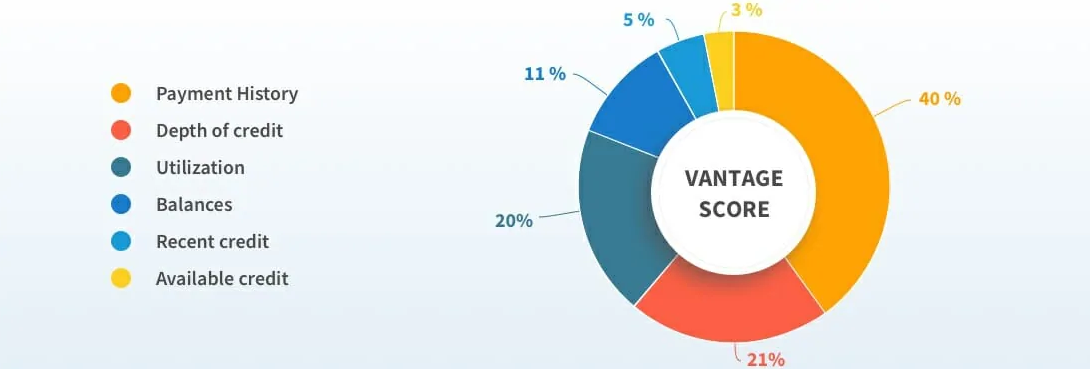
VantageScore 3.0 Factors

VantageScore 3.0 Scoring Factors

VantageScore evaluates information in six categories. Taken from a consumer’s credit file, this information is described in terms of influence. VantageScore’s descriptive terms usually range from “extremely influential” to “less influential.”

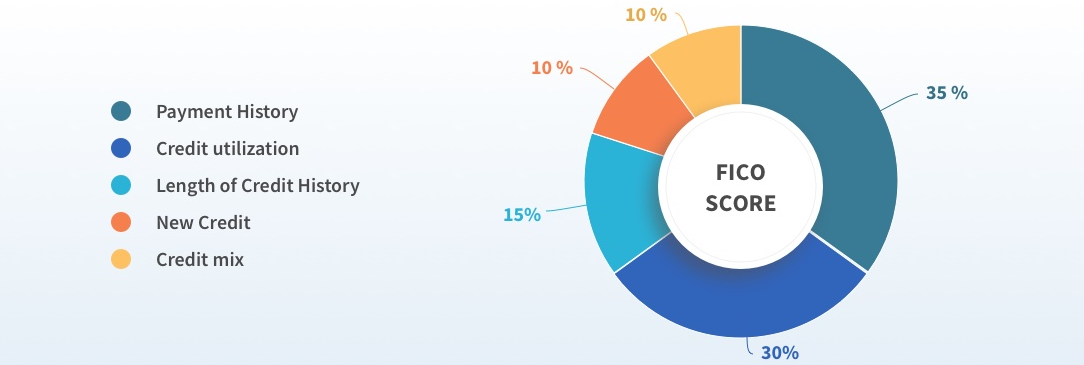
FICO Score Factors

FICO Score groups the information provided by consumer credit reports into five categories, each of which is assigned a percentage of the total score:

Beyond the differing emphasis on certain factors, VantageScore and FICO differ in how they generate their scores. FICO bases their score on the information from a single credit bureau. VantageScore, on the other hand, is an amalgamation of information from all three major credit bureaus. 

Related ArticleFICO® vs VantageScore® – How to Differentiate Two Credit Scoring Models

Different Score Versions

Credit scoring models are always adapting to better serve both borrowers and lenders. Because of these changes, as well as who is accessing the information, there are different versions of both FICO Score and VantageScore models.

FICO Score 8 and the new FICO Score 9, or VantageScore 3.0, for instance, are designed to tell a lender how likely you are to repay a loan. Other models, such as FICO 8 Auto Score, however, are specialized for specific loan types – in this case, auto loans. To sum it up nicely, different versions for different loans provide different scores.

What Information Each Credit Bureau Receives

Not every credit bureau receives all your payment history or other credit information. Some banks or card issuers only report to one credit bureau, while others may report to all three major bureaus: Experian, Equifax, and TransUnion. Because one scoring model might lack specific information, your credit score may be significantly different from one model to another.

Other Reasons for Different Credit Scores

Other reasons for differing credit scores include:

  • Your scores were accessed on different dates
  • Errors on your credit report
  • New hard inquiries haven’t been reported to a credit bureau yet

Which Credit Score Should I Focus On?

Since your credit scores can appear different, is there one score on which to focus? Yes and no.

Yes, because FICO Score is by far the most popular scoring model for lenders. Approximately 90% of banks and lenders rely on FICO for judging an applicant’s creditworthiness. Creditworthiness includes how much of a risk an applicant poses for defaulting on a loan, how much debt they already hold, and how well their finances can adapt to new credit lines.

That said, you should pay close attention to all of your credit scores. After all, a credit score judges your fitness as a borrower. While one score might be higher than another, they combine to provide a full picture of your credit strengths – and weaknesses.

Using all your credit scores allows you to understand your finances better and whether or not you need new credit. Plus, fixing a weakness in one credit score is sure to boost your other scores, as well.

Related Article: Can You Raise Your Credit Score 100 Points In a Month?

Americans’ Credit Score Knowledge Lacking, Says Study

mericans-credit-score-knowledge-lacking-study

Last updated on January 29th, 2024

While most Americans rely on credit in one form or another, many lack knowledge on some basic concepts. According to a recent report from the Consumer Federation of America, many U.S. consumers lack knowledge of five essential credit score basics and concepts.

New Study Highlights Consumer Gap in Credit Score Basics Knowledge

VantageScore and the Consumer Federation of America’s (CFA) new study involved 1,001 participants and divides the results between those consumers with an average household income below $25,000, and those with a household income of over $75,000. Here are the results:

  • Consumers with a lower income were more likely to apply for credit within the next 12 months
  • Those same consumers had less credit score knowledge (on average) than those with higher annual incomes
  • Many of all the respondents didn’t understand five basic credit concepts

Five Basic Credit Concepts Many People Don’t Understand

So, what are the five credit score basics and concepts that respondents failed to fully grasp?

Credit Scores Measure Your Risk of Not Paying

One-third (33%) of respondents correctly knew that your credit score measures your ability to repay balances on your lines of credit. Fourteen percent thought credit scores measure an applicant’s attitude towards credit – and not their risk of paying.

Credit scores measure a wide variety of factors, with payment history being the most important of those indicators. FICO, the scoring model used by more than 90% of lenders, for example, bases 35% of its overall credit score formula on a consumer’s risk of missing payments. VantageScore, the other major scoring model, places a weight of 32% on payment history.

Related Article: What Are the Easiest Credit Cards for Bad Credit to Get?

Bad Credit Can Cost You Thousands of Dollars

Only 22% of respondents in the CFA poll knew that a low credit score is likely to cost thousands of dollars more in interest on a loan than a borrower with good or excellent credit will have to pay. On average, a person with a high credit score will save $5,000 on a $20,000 loan with a 60-month repayment term, as opposed to someone with a low credit score.

Approximately 34% of Americans have what is known as “subprime credit.” A subprime credit score (or deep subprime score for those with very poor credit) means higher interest rates, lower credit limits, and fewer choices for credit cards, loans, and other products.

Related Article: What Are the Best Secured Cards for Rebuilding Credit?

Your Age Does Not Directly Impact Your Credit Score

Almost half (48%) of those surveyed believed that credit scores take age into account. While the length of credit/average age of credit is a factor, it makes up only a smart portion of a credit score.

Those who are older likely have a longer credit history, but this isn’t always the case. And those with a longer credit history and a history of missed payments will feel stronger effects than those with a shorter credit history but a record of on-time payments.

Utility Companies Can Run Credit Checks

Half of the respondents (50%) did not know that utility companies can conduct a credit check. This credit score knowledge oversight can also cost consumers money. Many consumers aren’t aware that a bad credit score can cost you when setting up your utilities after a move.

The electricity or gas company, for example, might request a deposit from someone with a history of late – or missed – payments. These deposits may run into hundreds of dollars. Those with good credit, on the other hand, likely won’t need to make any deposits when turning on their utilities after a move.

You Can Do Some Credit Repair Company Services Yourself

There are plenty of credit repair services available. Many of them, including the likes of CreditZO and Self, are highly-rated and serve an essential purpose in rebuilding credit.

That said, some aspects of credit repair are doable by the average consumer. 42% of respondents were unaware that they could submit disputes to the three major credit bureaus – Experian, Equifax, and TransUnion – via phone, online, or by mail.

Conclusion

While many Americans misunderstand some basic credit score concepts, that doesn’t mean they can’t increase their knowledge. Unless someone has a super-prime credit score of 850, there is always room for improvement. And even if someone has a perfect credit score, they will need to maintain it with best practices.

Fortunately, there is a great selection of credit resources on the web (including those here at BestCards.com). These resources can help you improve your credit knowledge base and open the door to better interest rates, higher credit limits, and lucrative rewards or signup bonuses in the future.

Related Article: What Is the Average Credit Card APR?

The Ultimate United MileagePlus Guide

ultimate-guide-to-the-united-mileageplus-program

Last updated on April 3rd, 2024

United Airlines is a founding member of the Star Alliance. It is also one of the world’s largest airlines, with an ever-expanding list of destinations worldwide. MileagePlus is United’s loyalty program, offering its members big rewards. Here’s everything you need to know about the United Airlines MileagePlus program.

What is MileagePlus?

MileagePlus is the loyalty program of United Airlines – one of the largest carriers in the United States. United rewards miles can be earned on any fares booked with the airline, both domestically and internationally.

There are several tiers to the MileagePlus program, called Premier levels. When you enroll in a credit card rewards program that is co-branded with United Airlines, you are automatically registered at the most basic level of the program.

There are four Premier levels: Silver, Gold, Platinum, and 1K. These Premier statuses will qualify you for mileage bonuses, seat upgrades, complimentary checked baggage, priority check-in, and many other benefits, including discounted and waived fees. Every Premier level affords you different benefits and bonuses, so the more you spend with United Airlines, the more you’ll receive.

How to Earn MileagePlus Miles

Perhaps the simplest and quickest way to earn miles as a MileagePlus member is by air travel with United Airlines.

Each time you purchase eligible fare and travel on flights that are operated by United or United Express, you’ll earn miles that are automatically deposited to your MileagePlus account. How you earn miles will depend on the type of ticket purchased, as well as the ticketing airline and the operating airline.

Miles also depend on your status within the MileagePlus program, with Basic members earning fewer miles than Premier 1K members (the highest tier):

  • Member: 5X miles per $1 spent on eligible United purchases
  • Silver: 7X miles per $1 spent on eligible United purchases
  • Gold: 8X miles per $1 spent on eligible United purchases
  • Platinum: 9X miles per $1 spent on eligible United purchases
  • Premier 1K: 11X miles per $1 spent on eligible United purchases

Miles earned on flights only apply to the ticket price and airline fees. Other charges, such as government fees, fuel surcharges, and taxes, do not earn MileagePlus miles.

Mile Boost Based on Fare Class

MileagePlus miles are also accrued based on the flight distance and the purchased fare class. For specialty tickets for flights operated by United or United Express, and for flights ticketed and operated by a Star Alliance or MileagePlus partner airline, members earn miles at a rate that is calculated based on a percentage of the flight distance.

Star Alliance partners award MileagePlus miles based on a calculation that involves the price and class of the ticket along with the flight distance; rewards miles will vary by Star Alliance partner.

Earning Miles with United Airlines Partners

MileagePlus members can also earn points when they spend money with United Airlines partners, including:

Hotel MileagePlus miles can be earned at most major hotel chains; Earn 2X miles at each property that participates in the United Hotels program. Rewards earning varies by hotel. Otherwise, you’ll earn a flat rate that depends on the hotel you’ve booked a stay at. For more details, visit United’s Hotel Partners page.
Dining When you register a credit (or debit) card with the MileagePlus Dining program, you’ll be able to earn miles when you dine at over 10,000 participating restaurants, bars, and clubs – but only when you pay for your meal with the card you’ve registered. You’ll earn up to 5 miles per dollar spent, and this includes tax and tip!
Car rental MileagePlus members can earn up to 1,250 award miles for each qualifying car rental. Partners include Hertz, Dollar Rent A Car, Thrifty, Groundlink, ExecuCar, and much more. Members also earn points when booking with SuperShuttle, Carmel, Bandwagon, and other ground transportation services.
Shopping MileagePlus members earn miles based on making purchases through the dedicated MileagePlus shopping portal, where points are earned for making purchases with hundreds of leading brands.

Earning MileagePlus Miles With Credit Cards

An easy way to earn additional MileagePlus miles is by applying for a United Airlines co-branded credit card. Issued through Chase Bank, these Visa cards offer excellent introductory bonuses when a spending limit is achieved during an opening period, usually either in 3 months of opening an account or within the first year.

Additionally, cardholders can earn extra miles on top of the rewards earned through the methods mentioned above by qualifying for MileagePlus elite status. Each card offer has its own set of benefits and perks, and the miles earned by using each card will vary.

Do MileagePlus Miles Expire?

No – United Airlines MileagePlus miles never expire as long as your account is open and active. 

How to Redeem MileagePlus Miles

There are several redemption options for MileagePlus miles. The most common is redeeming flight rewards, either with United Airlines directly or through Star Alliance partners. Bonuses also apply to several other airline partners, retail, and travel options.

Flights with United Airlines

The easiest way to use miles is through award ticket and flight bookings with United. To use points for flights, members need to book their flight at United.com and choose to pay with points. United Airlines offers several tiers of award seats; the better the seat, the more miles you will need to spend on qualifying for the seat. You will trade these awards as one-way flights.

Don’t just redeem miles for free flights with United Airlines if that’s not your preference. Miles also applies to upgrade your seats to a premium class. Upgrades, like award seats, are based on a one-way flight; each upgrade’s cost depends on the face class of the ticket you currently hold.

Types of Award Seats

MileagePlus currently offers two types of award seat: Saver Awards and Everyday Awards:

  • Saver Awards: More economical, with redemption flights starting from 5,000 to 12,000 miles. These low-cost award flights have lower availability, making them difficult to book.
  • Everyday Awards: More availability – at a higher price. Everyday Award flights offer unrestricted access for elite-tier MileagePlus members.

Flights with Star Alliance Partners

Members can also redeem miles with Star Alliance partners. In addition, miles are redeemable with a handful of other non-alliance airline partners. Although some restrictions may apply. Generally, MileagePlus members can both earn and redeem MileagePlus miles with Star Alliance partners.

For a full list of Star Alliance airline members, check out our Ultimate Star Alliance Guide.

Other Airline Partners

Azul Brazilian Airlines Great Lakes Airlines Hawaiian Airlines Aeromar
Cape Air Aer Lingus Silver Airways Air Dolomiti
Boutique Air Olympic Air Edelweiss Eurowings

What Are Rapid Rewards Points Worth?

Here are the latest valuations for leading frequent flyer loyalty programs:

Program Value (cents/point)
Air Canada (Aeroplan) 1.5
American Airlines (AAdvantage) 1.5
Alaska Airlines (Mileage Plan) 1.4
Avianca (LifeMiles) 1.5
British Airways (Avios) 1.3
Delta Air Lines (SkyMiles) 1.2
Frontier (Frontier Miles) 1.2
Hawaiian Airlines (HawaiianMiles) 0.9
JetBlue (TrueBlue) 1.4
KLM/ Air France (Flying Blue) 1.2
Korean Air (SkyPass) 1.6
Lufthansa (Miles & More) 1.5
Southwest (Rapid Rewards) 1.5
Spirit Airlines (Free Spirit) 0.8
United Airlines (MileagePlus) 1.2
Virgin Atlantic (Flying Club) 1.5

Guide to the MileagePlus Program Elite Tiers

Like other frequent flyer programs, the MileagePlus program features differing tiers of membership. Apart from the basic tier, there are four elite tiers of membership, known as the Premier levels.

Benefit Premier Silver Premier Gold Premier Platinum Premier 1K®
Pts/ on flights 7X 8X 9X 11X
Free bags 1 2 3 3
Priority check-in ✔️ ✔️ ✔️ ✔️
Priority security ✔️ ✔️ ✔️ ✔️
Priority Boarding Group 2 Group 1 Group 1 Pre-board
Free Economy Plus access Preferred seating at booking; Economy Plus at check-in At booking At booking At booking
Free Economy Plus for travel companions 1 1 8 8
Preferred seating for travel companions 8 8 8 8
Free Premier upgrades Day of departure 48 hours 72 hours 96 hours
Instant upgrades Y or B class fares Y or B class fares Y or B class fares Y, B or M class fares
Free drink/snack ✔️
24-hour flight changes Free within same fare class Free within same fare class Free within same fare class Free within same fare class
Access to most sold-out flights Y-class ticket, at least 24 hrs. before departure Y-class ticket, at least 24 hrs. before departure Y-class ticket, at least 2 hrs. before departure Y- or B-class ticket, at least 1.5 hrs. before departure
United Club℠ discount $50 discount $100 discount
CLEAR®  $149 $149 $149 Waived
No blackout dates* ✔️ ✔️ ✔️ ✔️
Priority award waitlisting ✔️ ✔️ ✔️ ✔️
Standby for international award flights ✔️ ✔️ ✔️ ✔️
Phone booking service fees $25 $25 Waived Waived
Fee for making changes or canceling an award ticket with redepositfootnote8 No fee No fee No fee No fee
Complimentary Marriott Bonvoy® Gold Elite status ✔️ ✔️ ✔️
Complimentary Avis elite status Avis Preferred Plus® Avis Preferred Plus® Avis President’s Club® Avis President’s Club®
Extra benefits when booking a VIP Access property with United Hotels ✔️ ✔️ ✔️ ✔️
Bonus miles on car rental with Avis and Budget Up to 1,000 base miles per rental Up to 1,000 base miles per rental Up to 1,250 base miles per rental Up to 1,250 base miles per rental

Meeting Elite Tier Requirements

Reaching higher levels requires meeting minimum points and spending requirements. These requirements take the form of PQPs and PQFs.

  • PQP: Premier qualifying points. Members earn PQPs on surcharges, base fares, upgrades, preferred seat purchases, Star Alliance flights, and more.
  • PQF: Premier qualifying flights. Members earn one PQF for every flight segment they fly with United.

United Elite Member Tiers

The Premier tiers break down as follows:

Premier Silver

Premier Silver is the first elite tier in the MileagePlus program, offering enhancements over Basic membership. Reaching Silver status requires 6 PQF and 2,000 PQP, or 2,500 PQP.

Silver status provides the following benefits to members:

  • Eligibility for complimentary Premier upgrades
  • Complimentary access to Economy Plus seats at check-in
  • One free checked bag
  • 7X miles on United purchases

Premier Gold

Reaching Premier Gold status requires 12 PQF and 4,000 PQP, or 5,000 PQP. Gold status provides the following benefits to members in addition to the Silver benefits:

  • Star Alliance Gold membership
  • Complimentary access to Economy Plus at booking
  • Two free checked bags
  • 8X miles on United purchases

Premier Platinum

Reaching Premier Platinum status requires 18 PQF and 6,000 PQP, or 7,500 PQP. Platinum status provides the following benefits to members in addition to the Gold benefits:

  • 40 PlusPoints. PlusPoints are points usable for upgrades whenever you choose.
  • Complimentary access to Economy Plus for you and eight companions
  • Three free checked bags
  • 9X miles on United purchases

Premier 1K

Premier 1K is the highest level in the MileagePlus program, offering the pinnacle of perks and service. Reaching Premier 1K status requires 26 PQF and 9,000 PQP, or 12,000 PQP. Platinum status provides the following benefits to members in addition to the Gold benefits:

  • 280 PlusPoints
  • Pre-boarding
  • One free drink and snack in economy class
  • 11X miles on United purchases

Current United Airlines Credit Cards

Check out more

Travel Rewards Credit Cards

United Gateway Visa Replacing Old TravelBank Card

united-gateway-visa-replacing-travelbank-card

Last updated on April 12th, 2023

Beginning September 21, 2020, existing United TravelBank Cards from Chase are switching to a new, re-branded United Gateway Visa Card.

Existing TravelBank cardholders will receive their new card by the end of October, though several features will remain the same, including:

  • Account number
  • Credit limit
  • Annual fee
  • Interest rates
  • Payment due date

Everything else, however, will be new. So, what does the new card offer that the current TravelBank does not?

The New United Gateway Visa Credit Card

The biggest change for the new United Gateway Visa is the switch from TravelBank Cash to MileagePlus miles. United MileagePlus miles have a value of up to 2.5 cents per point when booking United Airlines flights – far higher than the one-cent value of TravelBank Cash.

The new United Gateway Visa from Chase will earn 2X miles per dollar on United purchases and 2X miles on gas station purchases. All other purchases with the card earn a single mile per dollar spent. The TravelBank card only provided additional cash back on United purchases.

Other notable changes are the removal of price protection and the additions of Roadside Dispatch and Emergency Assistance Services. These new features are part of the Visa network’s protections and benefits.

United TravelBank Card

The United TravelBank Card, which is no longer accepting new applications, is a popular option for the United frequent flyer who wants no-fuss cash back with every purchase. The card earns 2% cash back on United Airlines purchases and 1% back on all other purchases. The cash back takes the form of TravelBank Cash.

TravelBank Cash is good for purchasing airfare and other United in-flight transactions, but it lacks the versatility for other methods of redemption, such as hotel bookings or car rentals with United Airlines partners. For this reason, the switch to United MileagePlus miles is a welcome change for many Chase cardholders.

Related Article: United Club Card Changes to Become Visa Infinite

Refinancing Debt: Everything You Need to Know

refinancing-debt-everything-you-need-to-know

Last updated on February 20th, 2024

The COVID-19 pandemic has many Americans considering debt refinancing. Is now a good time to do it? Does refinancing impact your credit score? How do the different types of debt obligations differ when it comes to reducing payments? Here’s everything you need to know about debt refinancing.

Does Refinancing Debt Hurt Your Credit Score?

Refinancing debt won’t hurt your credit score, generally speaking. That said, refinancing will have a short-term negative impact on your credit score because of two factors:

  • A new inquiry on your credit report from opening a new line of credit (otherwise known as a hard inquiry)
  • A new account, which lowers the average age of your credit history

These two factors have a small impact on your overall credit score. Hard inquiries account for 10% of your FICO Score, and the average credit age is worth about 15%. New inquiries stay on your credit report for 24 months, but the effects of these hard inquiries dissipate in a matter of months. Basically, in the long term, the benefits of refinancing often offset any immediate credit score decline.

Is Refinancing a Good Idea?

So, is refinancing a good idea? That depends. If you are struggling to meet your debt obligations, refinancing is a great way to get your finances in order. This is especially true with credit cards, where there are no loan origination fees, closing costs, etc.

Refinancing Credit Card Debt

Credit card refinancing is a straightforward process. This approach usually involves using a balance transfer credit card. Balance transfer cards allow consumers to repay their debt at a faster pace than usual – often thanks to 0% introductory APR periods.

Debt consolidation credit cards are another popular method for refinancing credit card debt. The most popular example of a refinance credit card is the Upgrade Card. The Upgrade Card is a hybrid of a credit card and personal loan, offering access to a large line of credit and flexible repayment options.

How to Refinance Credit Card Debt

The easiest way to refinance credit card debt is through a balance transfer. But how does one make a balance transfer? The process is straightforward:

  • Select and apply for a balance transfer card. Put what you’ve learned about your financial needs and goals into your research to find a card with the right APRs, intro offer, and credit limit.
  • Request the balance transfer. Contact the issuer of the new credit card to start the transfer of each balance.
  • Keep up with your payments. The best way to make a balance transfer credit card worthwhile is to make consistent payments.

Most balance transfer cards require you to enter the information for the transfer on the application. Always be sure to read the fine print beforehand and make sure you can transfer all – or most – of your outstanding debt.

Related Article: How Does the Credit Card Balance Transfer Process Work?

Debt consolidation credit cards – like the Upgrade Card – have a different process. Cards like these work by extending a line of credit, like a personal loan. Upgrade Card, for example, offers opening lines of credit of up to $20,000.

Using hybrid credit cards to refinance debt requires transferring the card’s balance into an associated bank account and using those funds to pay off existing credit card balances.

Users than repay the balance over a set term, which ranges between 12 and 60 months for the Upgrade Card specifically. According to research from Upgrade, paying off a $10,000 balance takes just a few years with the Upgrade Visa, compared with other traditional credit cards that can take up to 20 years – or more.

Why Consider Reducing Your Credit Card Debt Now?

The coronavirus (COVID-19) pandemic may seem like a bad time to think about consolidating your credit card debt. However, now is one of the best times to consider refinancing your debt, and here’s why:

  • The Federal Reserve’s Prime Rate is at an all-time low. The Prime Rate is the interest rate at which the Fed lends money to its top-shelf clients. With record-low rates for banks, the savings are being passed on to new applicants in the form of lower credit card interest rates.
  • Credit card companies are trying to entice new applicants as the average American’s credit card debt levels decline sharply. To bolster their books for investors, banks are offering excellent signup bonuses for credit cards – including lengthy 0% intro APR periods.
  • Reducing monthly payments is becoming more critical as family finances are continuing to be squeezed.

Refinancing Mortgages and Other Loans

If you’re refinancing your mortgage, the situation becomes somewhat murkier. Mortgage refinancing will require a new loan – and thus closing costs and origination fees. Over the life of the refinanced loan, the homeowner may end up paying more because of these initial fees and expenses.

The same applies to those seeking to pay a lower interest rate over the longer-term. If you can afford your monthly payments now, you are better off keeping up with your current obligations. Locking in a lower interest rate now for an additional 5, 10, or 15 years can end up costing you considerably more (i.e., you are wasting money for short term gain).

Conclusion

Before you consider refinancing things like your home, auto, or other significant investments, take the time to calculate your budget carefully. Can you reduce spending to meet your obligations, for example?

If you still are considering refinancing, do your homework and calculate the costs for both the short and long terms. Is refinancing going to help solve your problems, or just kick those problems further down the road?

Credit card refinancing is a much simpler – and more straightforward – process. The impact on your credit score is minimal – provided you make your payments on time.

Report: Immigrant Credit Applicants Facing Restrictions

applicants-with-dhs-work-restrictions-facing-issues

Last updated on February 20th, 2024

Chase Bank may be restricting access to personal credit cards for those applicants who have a Social Security Number (SSN) that requires authorization from the Department of Homeland Security for work. While the limitations aren’t certain, it’s something with which many U.S. residents will likely have to contend. Here’s what you need to know about the Chase restrictions on non-immigrant visas, and how to increase your approval odds.

Some Chase Credit Card Applicants Facing Immigration Restrictions

Reports indicate that Chase credit card applicants with non-immigrant visas are struggling to get approved for new credit cards from the bank. According to several users on popular forums, requests for additional information for those individuals with a Department of Homeland Security (DHS) authorized SSN is the primary cause of rejections.

Other Banks with Similar Policies

This DHS authorization SSN issue isn’t unique to Chase Bank. Wells Fargo also has a similar policy in place – as does online investment company, SoFi, according to reports. Wells Fargo has residency and availability language explicitly written into its personal credit card applications: “This credit card is only available to citizens and permanent resident aliens of the U.S. who have an unrestricted Social Security number or ITIN” (Individual Taxpayer Identification Number).

How to Improve Your Approval Odds when Applying

These potential restrictions of Chase credit cards to U.S. citizens and permanent residents (green card holders) are not certain. Those with a DHS authorization SSN and a prior relationship with Chase don’t seem to be having issues getting new credit cards with the bank.

Additionally, those who are proactive and willing to put in the hard work seem to have better approval odds after initial rejections. This process involves:

  • Reaching out to the Chase reconsideration line
  • Ensuring your green card is up to date
  • Always updating your immigration documentation as soon as possible

Chase, like other banks, doesn’t necessarily ask questions about your citizenship when applying for a credit card. That doesn’t mean, however, that they won’t.

Don’t Be Afraid to Call the Bank’s Reconsideration Line

Before applying for any credit card, make sure you read the terms and conditions and any other relevant information thoroughly. Like Wells Fargo, most credit card issuers explain who can – and can’t – apply for their products in clear language.

If you have difficulty getting a credit card you believe you should get, don’t be afraid to contact the bank’s reconsideration phone line. When calling a reconsideration line, be sure to have all the relevant information you’ll need. You will have the chance to explain your case to a credit card and loan specialist, and state why you believe you deserve the card.

New Chase Amazon Prime Rewards Card Targeted Offer

new-chase-amazon-prime-rewards-card-targeted-offer

Last updated on April 20th, 2023

Chase is now offering Amazon Prime Visa Signature credit cardholders the chance at bonus cash back. The new offers appear to be targeting the emails of current cardholders, with the chance at up to 4% cash back. Here’s what you need to know about the new Chase Amazon Prime Card cash back offer.

About the Amazon Prime Rewards Offer

Chase (and other issuers) frequently target current cardholders with exclusive offers. Now, the New York-based issuer is offering up to 4% cash back on all purchases for a limited time.

Current Prime Rewards Visa Signature cardholders are receiving email offers of 2% back, 3% back, or 4% cash back from now until either September 22, 2020, or February 11, 2021.

All these targeted offers provide unlimited cash back at the mentioned level. This bonus is in addition to the 5% cash back cardholders typically earn on purchases at Amazon.com or Whole Foods stores. The email also requires activation once received.

While the Chase Amazon Prime Rewards offer is targeted, many rewards forums are stating that the offers are very widespread.  If you are a current cardholder, check the mailbox you use to receive communications from Chase to see if you apply.

About the Amazon Prime Rewards Visa Signature Card

The Amazon Prime Rewards Visa Signature Card is a cash back rewards card that offers exceptional savings for frequent Amazon.com and Whole Foods shoppers. The card earns a healthy 5% back on purchases with both Amazon brands, plus 2% back on gas station and dining purchases.

While the card, from Chase Bank, features no annual fee, it does require an active Amazon prime subscription. This subscription is a $119 charge per year, effectively placing a backdoor annual fee on the card. For the Amazon fanatic, however, it’s money already spent, making the card a no-brainer.

Related Article: New Secured Amazon Credit Builder and Amazon Prime Credit Builder Store Card

New Aeroplan Program Details Emerge Ahead of Launch

new-aeroplan-program-details-emerge-ahead-of-launch

Last month, Air Canada unveiled new details about points expiration for its Aeroplan rewards program. This unveiling was part of the launch of a revamped rewards system due later this year. Now, Air Canada is revealing further details for the “new and improved“ Aeroplan program starting in November 2020. Here’s what you need to know:

New Aeroplan Program Details

The new Aeroplan program will officially launch on November 8, 2020. The initial plans from Air Canada were for the program to launch in Q3 of this year, but the COVID-19 pandemic made those plans unrealistic.

Improved Value for Aeroplan Members

What are some of the more noteworthy features of the new Aeroplan program? Air Canada is trumpeting an improvement in value on all flight rewards. This includes:

  • Air Canada Aeroplan members can use their points to purchase any Air Canada seats available for sale, with no restrictions.
  • No fuel surcharges on any Air Canada flights. Air Canada will also waive additional surcharges (excepting taxes and third-party fees).
  • The introduction of a Points Prediction Tool that provides an estimate of the Aeroplan points needed to book an award flight. Award flight prices will be based on actual market prices, and not based on a static awards chart.
  • New travel partners, including Etihad Airways and Azul.
  • Members can use Points + Cash to pay for award flights. This will provide greater financial flexibility for bookings.
  • Points are redeemable for flight upgrades, including upgrades to Air Canada Premium Economy and Business Class (when available).
  • Points also apply towards in-flight Wi-Fi, Maple Leaf Lounge access, car rentals, hotel stays, and more.

New Elite Status Member Benefits

The new Aeroplan program will also be more rewarding to members with elite tier status. This new elite level is known as “Priority Rewards”. Aeroplan members at 35K Status or higher will automatically receive Priority Rewards when the new Aeroplan program launches in November. These new elite status perks include:

  • 50% off the price if purchasing points.
  • Status Pass: Eligible elite status members can share their benefits with friends and family members – even if they are not traveling together. Shareable benefits include lounge access, priority boarding, and more.
  • The ability to earn status qualification points with everyday purchases, such as retail, travel, credit card, and other purchases.

New Canada-Only Credit Cards

The final piece of news coming out of the new Aeroplan launch details are new credit cards for the Canadian market. Unfortunately, there are no new credit cards for the American consumer – unless they also reside in Canada.

Fortunately, Aeroplan members can still take advantage of the new Aeroplan program via TD Bank’s Aeroplan credit card. The TD Aeroplan Visa Signature® Credit Card offers 2X miles per dollar on Air Canada flights and a single mile for every other dollar spent on the card.

Related Article: The Ultimate Star Alliance Program Guide

Advertiser Disclosure

BestCards is an independent, Florida-based credit card comparison platform. Many of the card offers that appear on this site are from companies from which BestCards receives compensation. This compensation may impact how and where products appear on this site (including, for example, the order in which they appear). BestCards does not include all card companies or all card offers available in the marketplace.